Are HDU Signs Waterproof? What Exterior Buyers Need
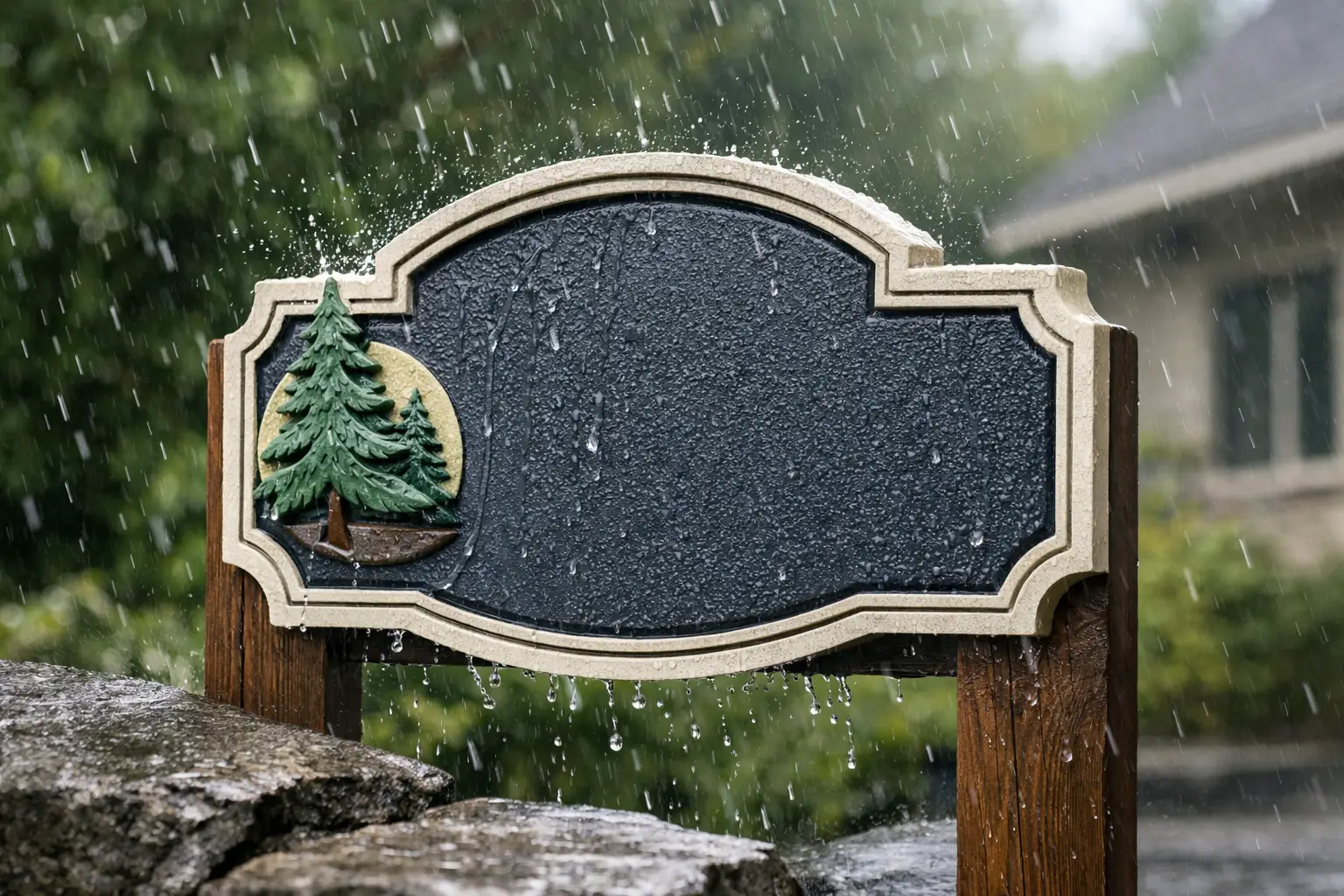
A carved entrance sign can look excellent when it leaves the shop and still fail early if its material, finish, and mounting details were not selected for outdoor exposure. So, are HDU signs waterproof? Sign-grade HDU itself is highly water-resistant and does not behave like natural wood, but a dependable exterior sign depends on more than the core material. The paint system, exposed edges, layered components, fasteners, drainage, and installation all affect how the finished assembly performs in rain, humidity, sun, and changing temperatures.
For business owners, property managers, and sign professionals, that distinction matters. “Waterproof” can sound like a blanket promise. In fabrication, it is more useful to identify which parts of the sign can encounter moisture, how water will leave the assembly, and which finish specifications will protect the intended appearance over time.
What HDU Is and Why It Handles Moisture Well
High-density urethane, commonly called HDU, is a closed-cell polyurethane material manufactured for applications that need a stable, routable substrate. Quality 15-pound sign-grade HDU is widely used for exterior dimensional signs, carved panels, monument sign faces, raised letters, and custom logo components because it will not swell, split, rot, or cup the way wood can.
Unlike wood, HDU does not have grain that expands as it gets wet or contracts as it dries. That gives a routed sign panel a more predictable surface for carved backgrounds, prismatic borders, recessed copy, and raised details. It is also a useful material for projects that require a wood-grain appearance without relying on a natural wood substrate.
In ordinary exterior conditions, rain does not penetrate a properly manufactured HDU panel in the way it can penetrate untreated lumber, MDF, or some lower-grade composite materials. The material itself is not the usual point of failure. The more practical question is whether the full sign system has been designed and finished for its location.
Are HDU Signs Waterproof After Routing and Finishing?
An HDU sign can perform very well outdoors, including in wet climates, when it is fabricated and finished as an exterior sign. Routing does not turn sign-grade HDU into a moisture-sensitive material. However, routing creates details that need proper preparation: deep recesses, sharp inside corners, texture, dimensional letters, and layered edges all increase the number of surfaces that must receive consistent coating coverage.
The finish is not merely decorative. Primer and compatible exterior coatings create the color, sheen, and surface protection the sign needs. A routed background may require careful spraying or brushing so coating reaches the bottom of the recesses and the walls around raised lettering. A textured wood-grain finish needs enough coverage to remain visually consistent without filling in the detail that was intentionally carved.
For that reason, HDU Signs treats approved artwork, recess depths, border sizes, color specifications, and finish expectations as production details rather than general preferences. A dark painted background with light raised copy, for example, may require different masking and finishing steps than a panel receiving a simulated wood-grain treatment and metallic dimensional letters.
“Waterproof” should not be interpreted to mean that any coating, joint, or attachment method is automatically maintenance-free. An exterior HDU sign is a durable manufactured component, not an indestructible object. Proper finishing protects the panel, while good design and installation prevent water from being held where it does not belong.
The Areas Where Water Can Still Create Problems
The main moisture risks usually occur at the interfaces around HDU, not through the panel itself. Layered sign construction, dissimilar materials, wall attachments, and site-built monument structures all introduce conditions that should be addressed before fabrication and installation.
Seams and Layered Components
A multi-layer sign may combine HDU with acrylic, PVC, metal-faced elements, or separate dimensional letters. These materials can create strong visual depth, but their joints need to be planned carefully. If a horizontal seam faces upward or a narrow gap traps water and debris, moisture can remain in the joint longer than intended.
Good sign design avoids unnecessary water-catching ledges and provides sensible overlap, sealant provisions where appropriate, and clear component relationships. The correct approach depends on the sign's orientation and construction. A wall-mounted dimensional logo has different drainage concerns than a freestanding entrance panel installed in a masonry monument.
Fasteners and Mounting Holes
HDU itself handles moisture well, but penetrations made for screws, studs, bolts, or through-mount hardware need proper attention. The installer should use suitable fasteners for the wall, frame, or structure and seal penetrations as required by the mounting method and site conditions.
This is especially relevant when a panel is installed over a substrate that can absorb water or deteriorate, such as wood framing. A high-quality HDU face cannot correct a failed backing board, loose post cap, cracked masonry joint, or improperly flashed monument cabinet. The customer or installer must verify the condition of the receiving structure before installation.
Water Trapped Behind the Sign
A sign mounted tightly against an uneven wall can create pockets where water and debris collect. In some applications, stand-offs, spacers, or an engineered mounting approach can allow appropriate clearance and drainage. In others, a flush installation is correct, provided the wall surface and sealing details are sound.
There is no universal mounting detail for every sign. Building material, local climate, sign weight, wind exposure, wall flatness, and attachment method all matter. Structural work, permits, and site verification remain installation responsibilities unless specifically included in the written scope.
Coating Damage and Deferred Maintenance
Exterior paint finishes eventually experience UV exposure, airborne contaminants, lawn equipment impact, abrasion, and cleaning chemicals. A deep scratch or chipped edge does not mean the HDU core will begin rotting like wood, but it can compromise the appearance of the sign and should be addressed before discoloration or further coating failure spreads.
Periodic inspection is sensible for any exterior identity sign. Look for paint wear, open seams, failed sealant, loose letters, corroded hardware, and water-staining caused by the surrounding structure. Prompt touch-up is generally simpler and less expensive than waiting for multiple finish issues to develop.
Design Choices That Support Long-Term Exterior Performance
The best HDU sign projects account for weather while the artwork and construction are still being defined. That starts with selecting appropriate panel thickness, raised-letter depth, border proportions, and mounting preparation for the planned location. A very thin panel may be appropriate for a protected wall application but not for a large freestanding sign face exposed to wind and handling.
Readable copy also matters. Deep carvings, elaborate textures, and narrow strokes can look impressive in a close-up proof, yet become difficult to read from the road or harder to finish consistently. A practical exterior sign balances visual character with clear contrast, adequate letter size, and details that can be reliably produced and maintained.
Color selection deserves the same discipline. Provide specific color references when they are required, and remember that dark colors can show dust, water spotting, and sun fade differently than lighter colors. Metallic effects, glossy surfaces, and simulated wood finishes may also call for a different maintenance expectation than a simple satin-painted panel.
Artwork should clearly identify each layer, finish, dimension, recess, and attachment requirement. Vector files are preferred, and fonts should be outlined before production. Those details allow the manufacturer to route the intended geometry accurately and give the installer a clearer understanding of what arrives at the job site.
HDU Compared With Wood for Exterior Signs
Wood remains a valid aesthetic choice for certain sign projects, particularly when natural grain, species-specific character, or traditional joinery is central to the design. But wood requires greater attention to moisture management because it can absorb water, move with humidity, develop checks, and eventually rot if its coating system or edge protection fails.
HDU offers a more stable alternative when the goal is a carved or dimensional appearance with fewer material changes caused by weather. It can be routed into wood-grain textures, sandblasted-style backgrounds, v-grooves, and raised shapes while avoiding the grain movement inherent to solid wood.
That does not mean HDU is the right answer for every component. Metal may be preferred where a thin, crisp architectural edge is needed. Acrylic can provide a particular color, translucency, or polished-face effect. PVC can suit certain flat or layered elements. Material selection should follow the intended appearance, thickness, exposure, attachment method, and budget rather than a broad claim that one material is best in every circumstance.
What to Specify Before Ordering an Exterior HDU Sign
A clear fabrication scope reduces preventable surprises. Before production, define the finished dimensions, panel thickness, colors, finish type, routed detail depths, layered materials, and intended mounting method. If the sign is replacing an existing monument face, verify the opening size, attachment points, clearances, and any irregularities in the existing structure.
For dimensional letters or logos, confirm the actual installation surface and provide the final layout dimensions. For freestanding panels, establish whether posts, frames, brackets, or site-built structures are part of the project. Manufacturing a finished sign face and engineering or installing its supporting structure are separate responsibilities unless the quote specifically states otherwise.
The practical answer to the question is that HDU is an excellent exterior sign material because it resists water and avoids the rot and swelling associated with wood. Protect the finish, plan the joints and mounting details, and verify the site before installation. Those steps give a custom HDU sign the conditions it needs to remain readable and professionally finished for years.