The Main Difference
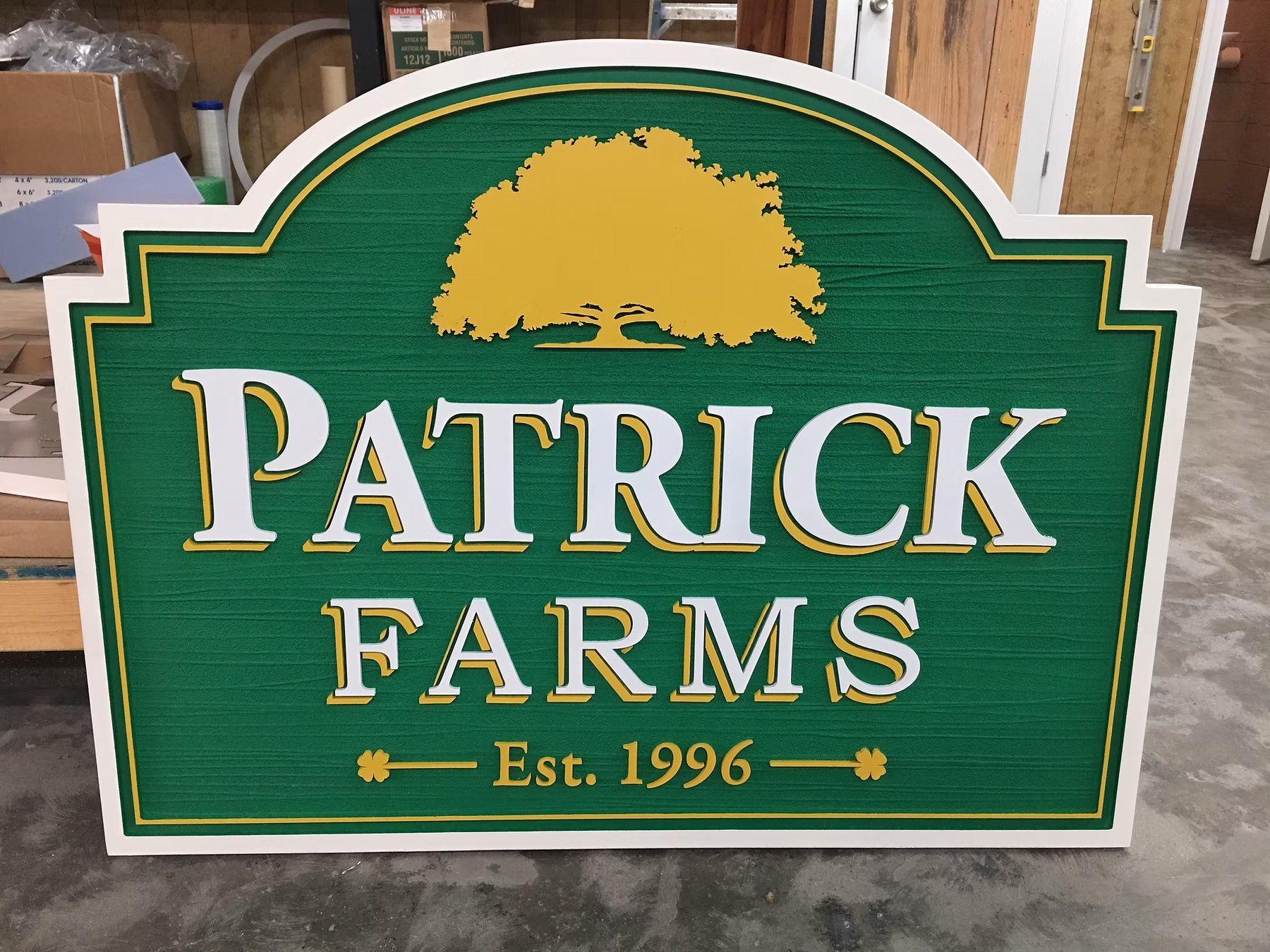
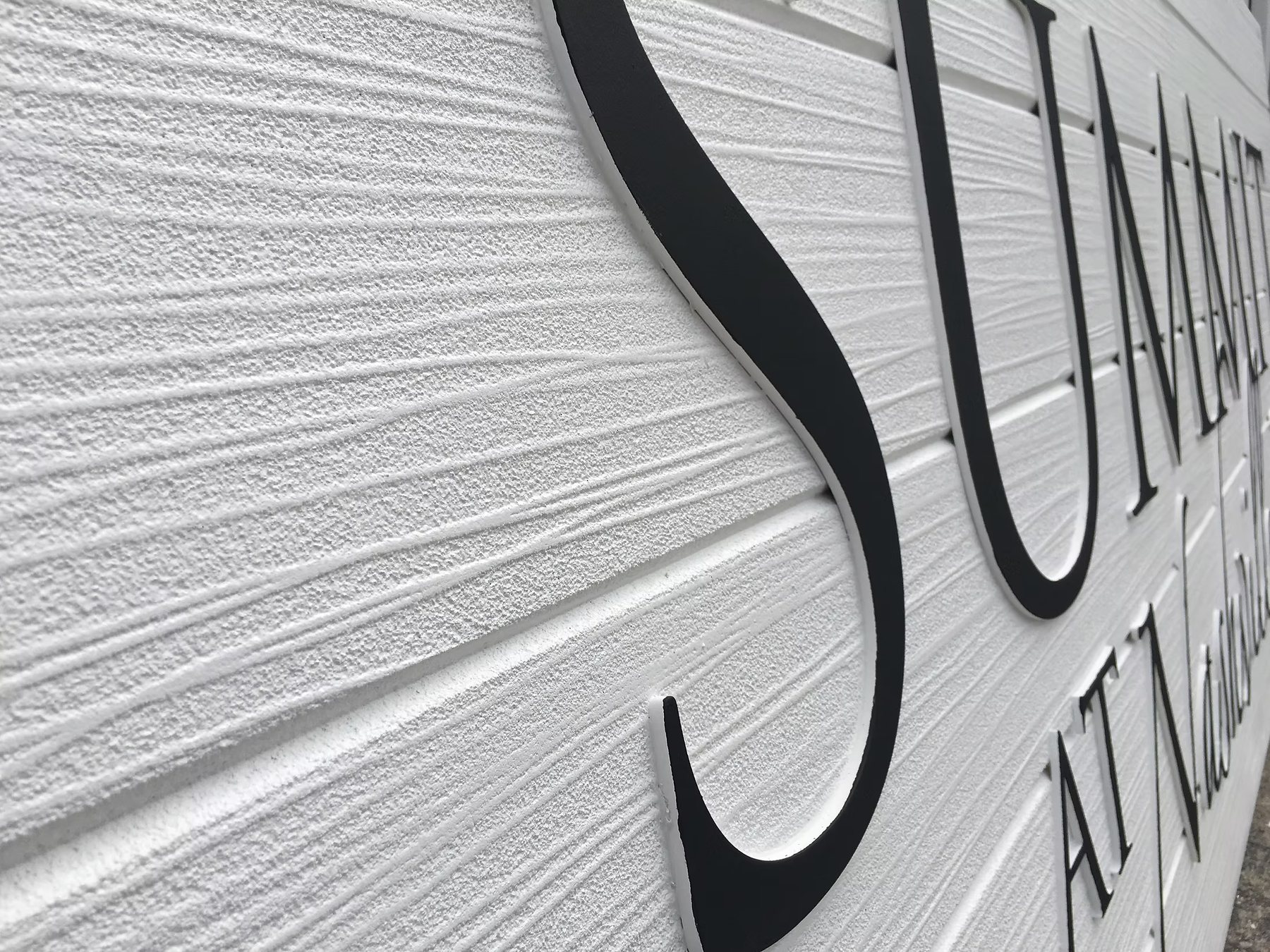
Wood is a natural structural material with real grain, variation and character. It expands and contracts as moisture conditions change, and individual boards can contain knots, checks or internal stress. HDU is a manufactured closed-cell board with consistent density and no natural grain direction. A woodgrain appearance can be routed or textured into its surface.
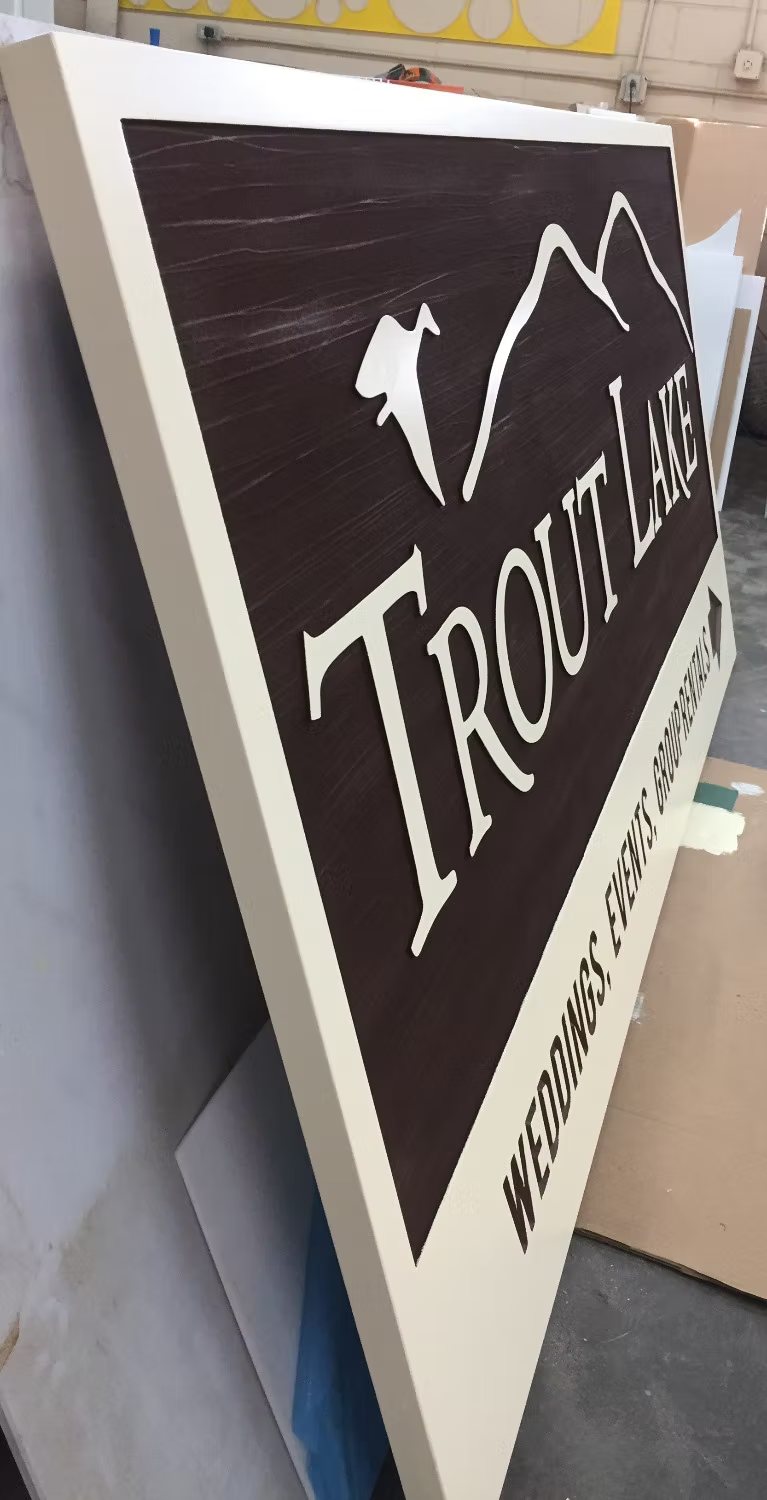
For customers, the practical question is not which material is universally better. It is which material best supports the design and location. A rustic sign may benefit from authentic cedar texture. A precisely routed logo with painted dimensional copy may benefit from HDU consistency. Some projects combine HDU faces with metal frames, posts or backing systems.
- Natural grain versus manufactured consistency
- Real wood character versus routed texture
- Different movement and support requirements
- Both can receive painted finishes
- Material choice follows the application
Moisture, Movement and Maintenance
Exterior wood must be selected, sealed, finished and maintained with care. Even durable species can move across the grain, and coating failure may expose the material to moisture. HDU does not have wood grain and does not rot in the same manner, which reduces several common substrate concerns. That does not make an HDU sign maintenance-free.
Paint films, adhesives, seams, fasteners and mounting hardware remain exposed to weather. Dark colors can create heat, impacts can dent surfaces and improper support can allow a panel to flex. Any outdoor sign should be inspected periodically and touched up before small coating damage becomes a larger problem.
- Wood movement follows grain and moisture
- HDU avoids knots and natural grain movement
- Both require compatible coatings
- Hardware and joints still matter
- Periodic inspection protects either material
Routing, Detail and Design Freedom
The uniform surface of HDU allows a router to cut consistent pockets, beveled edges, fine borders and dimensional layers. It can be laminated to create additional depth and shaped into curves or decorative silhouettes. Wood can also be carved and routed, but grain direction and defects may influence fine details and narrow parts.
Designers should avoid treating either material like metal. Thin strokes, sharp points and unsupported spans can break. Letter shapes must be thick enough for mounting, and panels must have sufficient body around holes and edges. Manufacturing review often improves a design without changing its visual identity.
- Consistent CNC machining in HDU
- Authentic grain in natural wood
- Layered dimensional construction
- Edge profiles and routed backgrounds
- Minimum feature sizes protect strength
Cost, Weight and Project Selection
Cost depends on sheet or board size, thickness, density, yield, machine time, finishing, hardware and shipping. A small sign is not priced by material area alone because setup and finishing remain. A large irregular shape may consume the full rectangular area needed to contain it. Wood pricing also varies considerably by species and grade.
HDU is often lighter than a comparable solid wood panel, which can simplify handling and shipping, but it is not structural framing. Large signs may need aluminum, steel or other support. The quote should identify the sign component being supplied and leave structural installation decisions to the qualified installer when those services are not included.
- Compare complete project cost, not sheet price
- Consider packaging and shipment
- Support large panels appropriately
- Select authentic grain only when needed
- Use the approved drawing as the scope
How a Project Moves From Idea to Shipment
A successful custom sign order is a controlled manufacturing process rather than an instant print job. The first step is identifying the finished result: what the sign or letters must say, where they will be used, the overall size, quantity, visual style and delivery location. Direct business customers can describe the appearance in ordinary language. Sign shops can provide technical specifications, vector files and production notes. Either approach is acceptable as long as the final scope becomes clear before cutting begins.
We review the information for manufacturability and quoting. That review may identify narrow letter strokes, unsupported areas, unrealistic depths, incomplete dimensions or artwork that needs to be converted into clean vector paths. The written quote states the component being supplied, material, thickness, finish, quantity, packaging and shipping. An approval drawing or documented specification then becomes the production reference. The customer should check spelling, dimensions, colors, quantities and sidedness carefully because custom products are manufactured specifically for that order.
After approval and payment requirements are completed, material is allocated and the project enters production. CNC work may include outside profiling, pocket routing, v-carving, texture, holes and separate dimensional layers. Parts are sanded and prepared for the finish listed in the quote. Completed work is inspected, photographed when appropriate and packaged to protect edges and painted surfaces. Shipment details are provided according to the agreed delivery method. Field measurements, permits, structural supports and installation remain the responsibility of the customer or installer unless those services are expressly included in writing.
Information That Helps Us Quote Accurately
A photograph or rough idea is enough to begin a conversation, but accurate pricing requires specifics. Include the exact finished width and height, quantity, whether the sign is single- or double-sided, and whether you need raw components or a fully finished product. Supply the best logo file available and list every paint color by code when possible. For replacement faces, provide straight-on photographs, the opening measurements, recess depth and mounting details. For dimensional letters, include the desired letter height, overall line width and installation surface.
Shipping can influence construction and packaging, especially for large panels or fragile shapes. Include the delivery ZIP code, whether the location is commercial or residential, and whether a loading dock or forklift is available for freight. Also tell us the required date. A requested date is not guaranteed until production and transit are confirmed, but early notice helps identify the correct shipping method. Complete information reduces back-and-forth, prevents assumptions and produces a quote that clearly states what will arrive.