Vector Artwork Is the Best Starting Point
Vector files describe shapes with mathematical paths instead of pixels. They can be enlarged without becoming blurry and allow the router or cutting software to follow exact outlines. Common vector formats include AI, EPS, SVG and DXF. A PDF may also contain vector artwork, but a PDF exported from a photograph is still only a raster image.
JPEG and PNG files are useful visual references, especially when they are large and clear, but they often require recreation before production. Logos copied from a website are usually too small for accurate dimensional work. When vector art is not available, send the best original file and we will identify whether cleanup or recreation is needed.
- AI and EPS logo files
- SVG closed-path artwork
- DXF production geometry
- Vector PDF files
- High-resolution reference images when necessary
Convert Fonts and Clean the Paths
Fonts should be converted to outlines so the letter shapes do not change when the file is opened on another computer. Each outside profile should be a clean closed path without duplicate lines, tiny stray objects or self-intersections. Overlapping shapes need to be intentionally combined or clearly identified as separate layers.
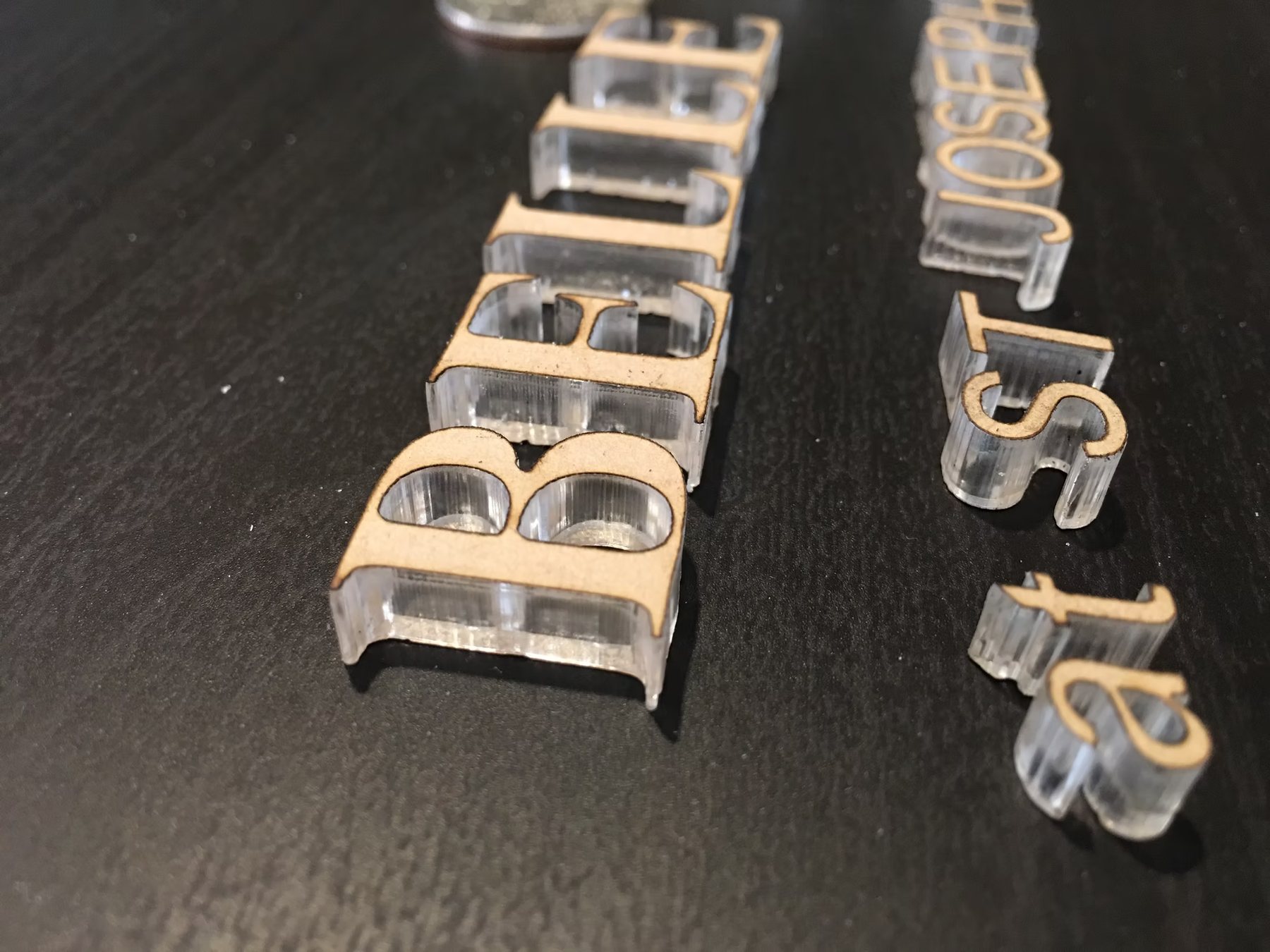
For custom-cut blanks, show the outside cut line distinctly and identify every interior cutout. For dimensional letters, indicate whether counters such as the center of an O are separate pieces or open areas. Extremely narrow strokes, sharp points and tiny islands may require adjustment for strength and tool access.
- Convert text to outlines
- Remove duplicate and hidden paths
- Close open contours
- Separate cut lines from printed references
- Identify all loose interior pieces
Scale, Dimensions and Color Information
Every production file needs a confirmed scale. Provide the exact overall width and height or place a dimension line on the drawing. Do not assume a file will open at the intended size. For replacement panels, compare the artwork dimensions with field measurements and any required border clearance.
Colors should be identified with recognized paint codes whenever possible. Screen colors, CMYK values and printed paper can appear different under changing light. When an exact brand color is important, provide the approved physical standard or manufacturer code. Also identify which surfaces receive each color, including returns and background textures.
- One confirmed overall dimension
- Finished width and height
- Material thickness
- Paint manufacturer and color code
- Front, edge and background color notes
Approval Drawings Control Production
After file review and quoting, a production drawing may show the overall dimensions, material, thickness, colors, component layers and mounting preparation. The customer must review spelling, proportions, quantities and measurements before approval. Manufacturing follows the approved drawing rather than an earlier email description or an unscaled reference image.
Changes after approval can affect material, schedule and price. Custom products are not returnable because the customer later changes a name, color, size or design. Careful approval is therefore one of the most important steps in a successful sign project.
- Check every letter and number
- Confirm overall and component dimensions
- Review colors and finishes
- Verify quantity and sidedness
- Approve mounting preparation and shipment
How a Project Moves From Idea to Shipment
A successful custom sign order is a controlled manufacturing process rather than an instant print job. The first step is identifying the finished result: what the sign or letters must say, where they will be used, the overall size, quantity, visual style and delivery location. Direct business customers can describe the appearance in ordinary language. Sign shops can provide technical specifications, vector files and production notes. Either approach is acceptable as long as the final scope becomes clear before cutting begins.
We review the information for manufacturability and quoting. That review may identify narrow letter strokes, unsupported areas, unrealistic depths, incomplete dimensions or artwork that needs to be converted into clean vector paths. The written quote states the component being supplied, material, thickness, finish, quantity, packaging and shipping. An approval drawing or documented specification then becomes the production reference. The customer should check spelling, dimensions, colors, quantities and sidedness carefully because custom products are manufactured specifically for that order.
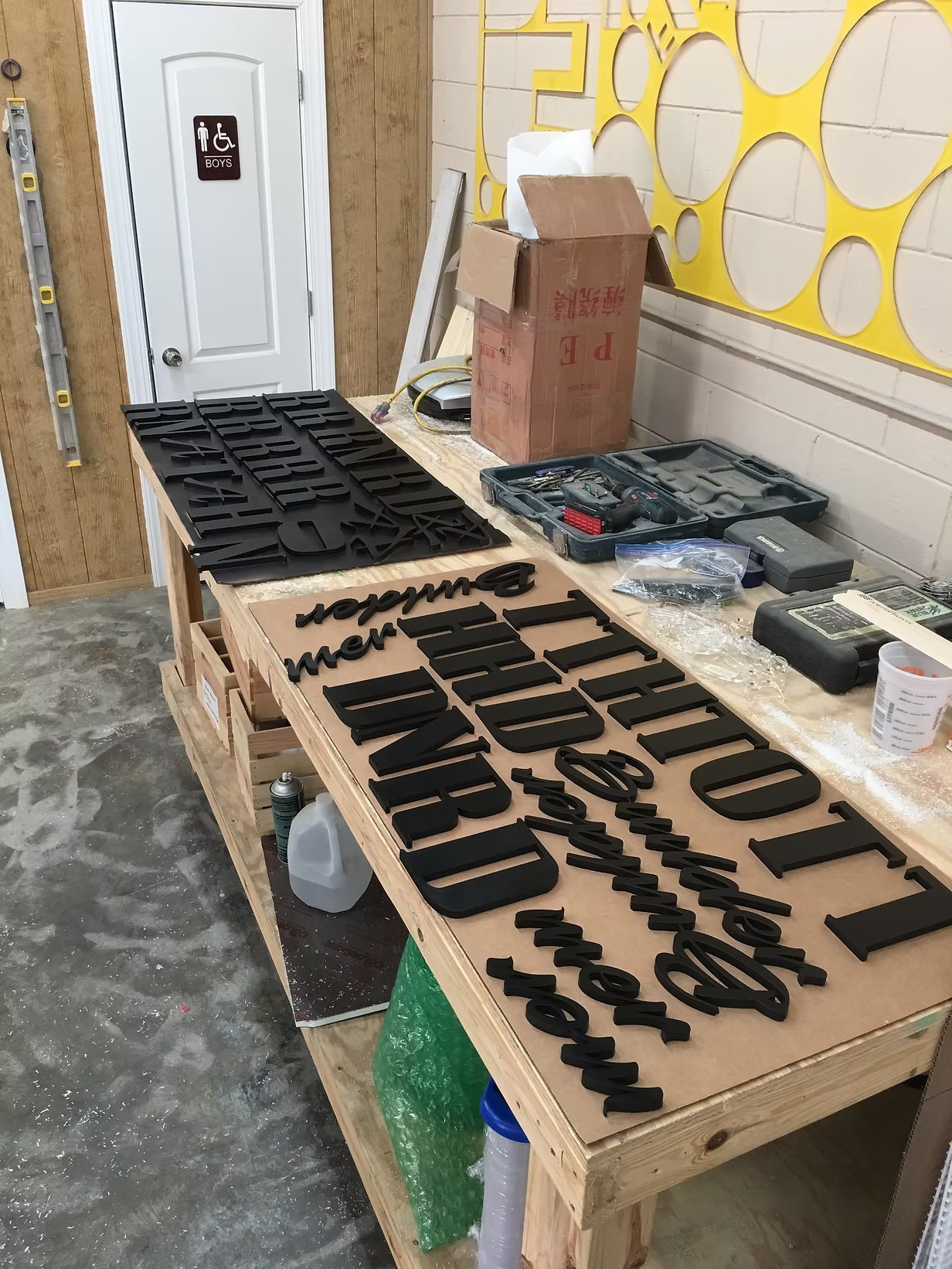
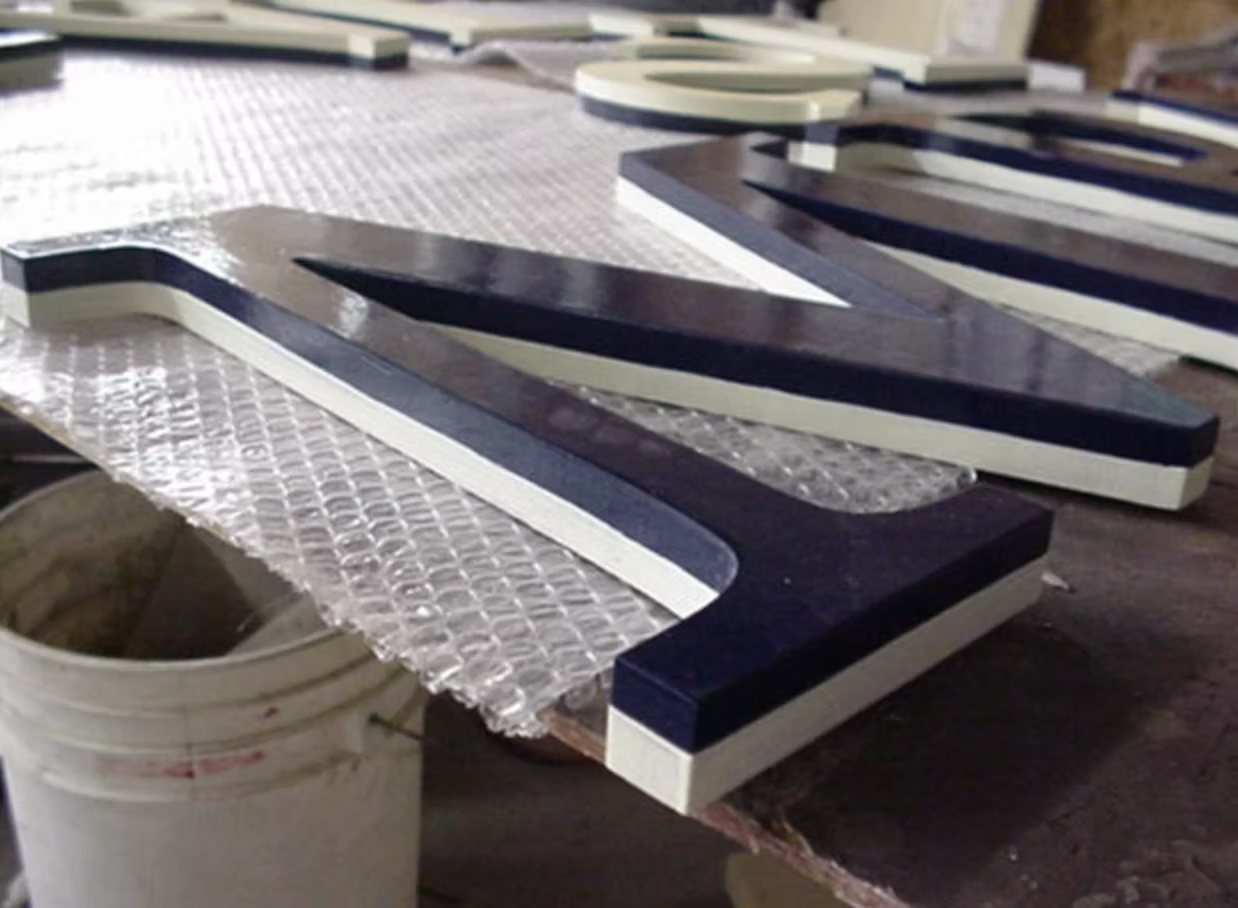
After approval and payment requirements are completed, material is allocated and the project enters production. CNC work may include outside profiling, pocket routing, v-carving, texture, holes and separate dimensional layers. Parts are sanded and prepared for the finish listed in the quote. Completed work is inspected, photographed when appropriate and packaged to protect edges and painted surfaces. Shipment details are provided according to the agreed delivery method. Field measurements, permits, structural supports and installation remain the responsibility of the customer or installer unless those services are expressly included in writing.
Information That Helps Us Quote Accurately
A photograph or rough idea is enough to begin a conversation, but accurate pricing requires specifics. Include the exact finished width and height, quantity, whether the sign is single- or double-sided, and whether you need raw components or a fully finished product. Supply the best logo file available and list every paint color by code when possible. For replacement faces, provide straight-on photographs, the opening measurements, recess depth and mounting details. For dimensional letters, include the desired letter height, overall line width and installation surface.
Shipping can influence construction and packaging, especially for large panels or fragile shapes. Include the delivery ZIP code, whether the location is commercial or residential, and whether a loading dock or forklift is available for freight. Also tell us the required date. A requested date is not guaranteed until production and transit are confirmed, but early notice helps identify the correct shipping method. Complete information reduces back-and-forth, prevents assumptions and produces a quote that clearly states what will arrive.