Replace the Sign Face, Not the Entire Monument
Many masonry, stucco, brick and framed monument structures remain solid long after the original sign panel has faded, cracked or become outdated. Replacing only the face can refresh the property identity while preserving the existing base. The work begins with accurate field measurements, photographs and an understanding of how the current panel is attached.
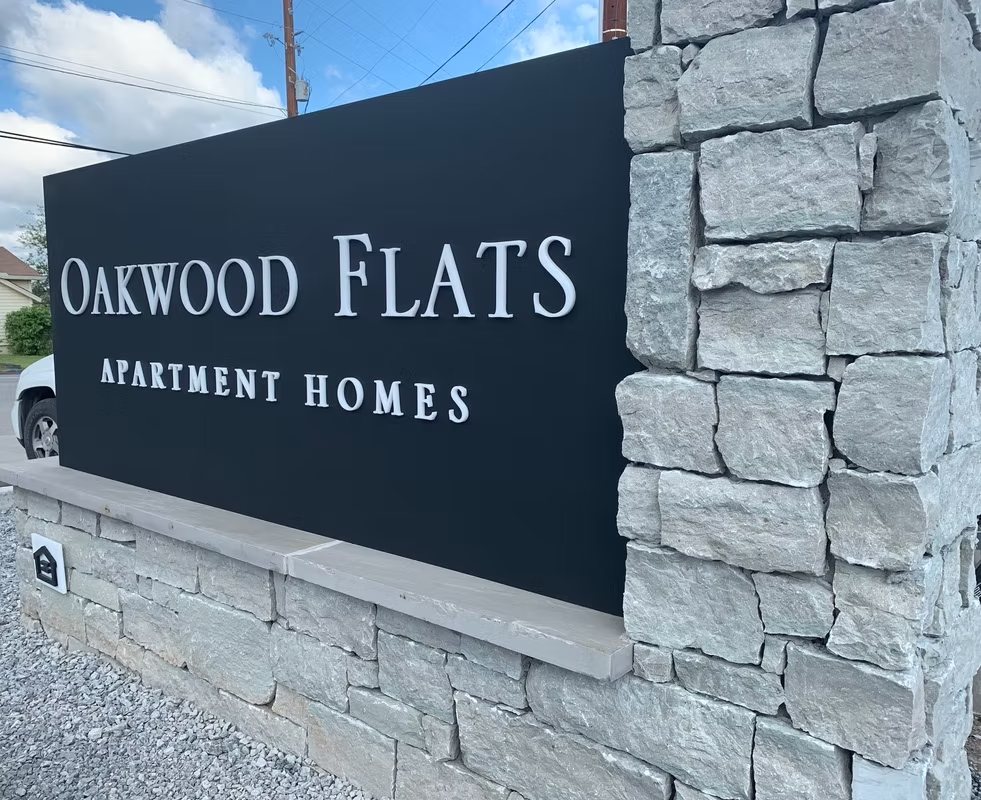
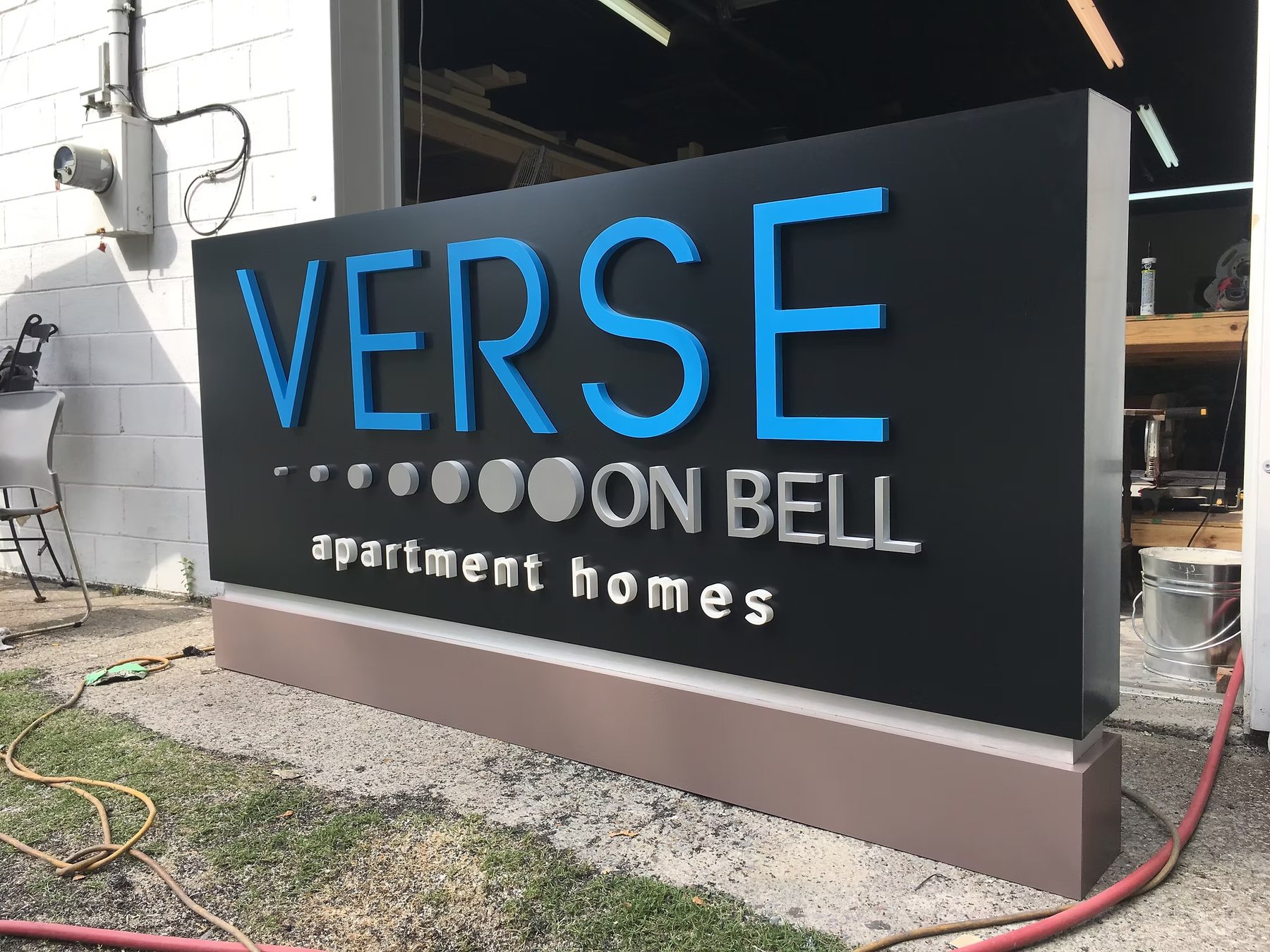
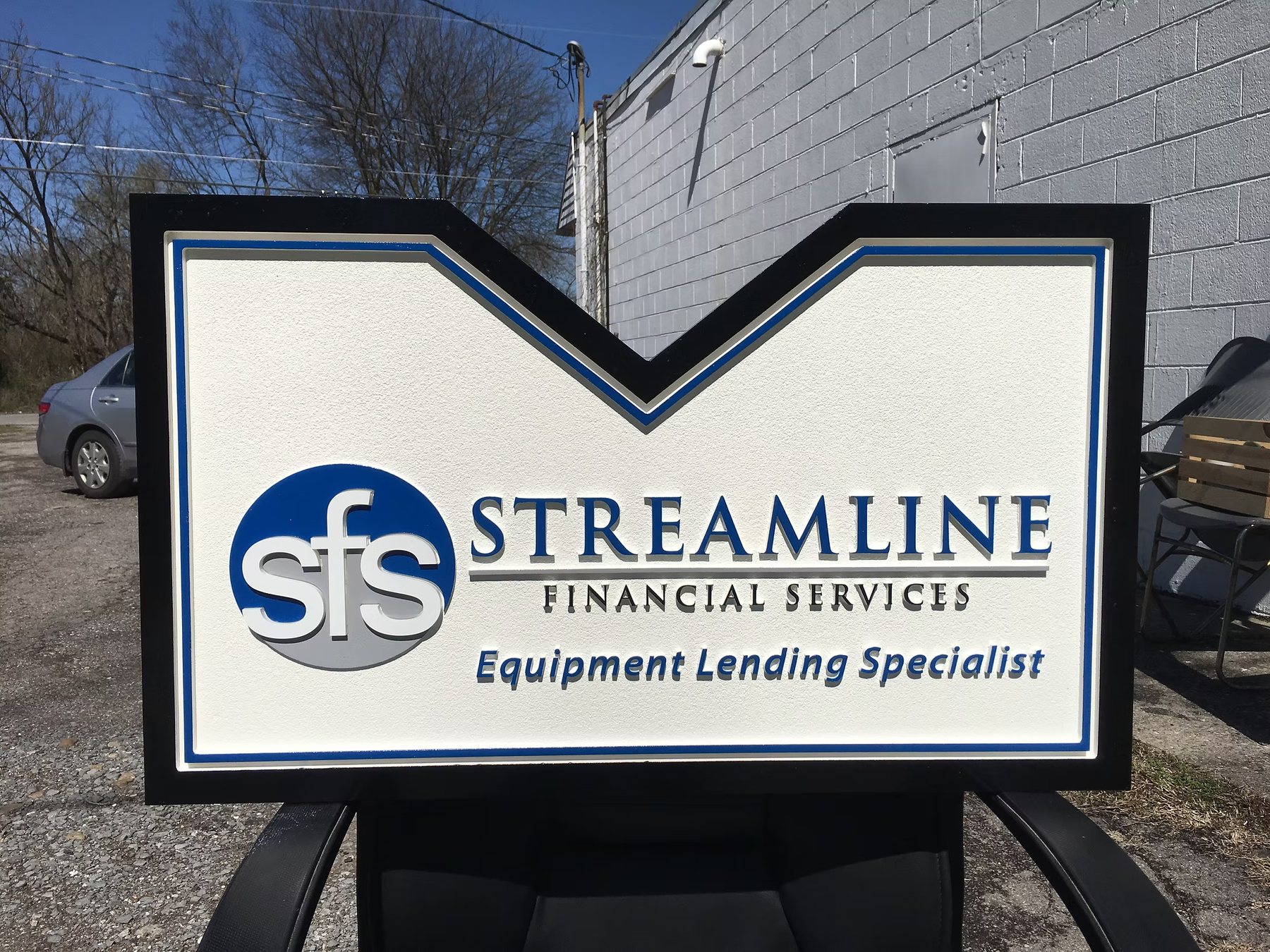
We manufacture replacement faces for business entrances, subdivisions, apartment communities, churches, schools, parks and commercial properties. The new face may be a simple routed panel, a layered dimensional assembly, a panel with separate letters or a custom profile designed to fit the opening. Installation is not included unless specifically written into a quote; the finished components are prepared for shipment to the customer or installer.
- New faces for existing monument structures
- Single- or double-sided configurations
- Custom shapes and fitted inserts
- Dimensional letters and logo overlays
- Nationwide shipment to installers
Measurements That Protect the Fit
A monument opening can appear rectangular while still having tapered sides, uneven masonry or decorative trim that reduces the usable area. For that reason, overall width and height are not always enough. We recommend photographs with a tape measure visible, dimensions at multiple points, the depth of the recess and details showing brackets, retainers or fasteners.
When an existing panel can be removed, tracing or scanning its outside profile provides useful confirmation. Large templates can also be created by the installer. We manufacture from approved dimensions and drawings, so the person measuring must verify the structure before production. A clear approval drawing is the best protection against costly field modifications.
- Width measured at top, middle and bottom
- Height measured at left, center and right
- Recess depth and trim clearance
- Fastener and bracket locations
- Photographs from straight-on and angled views
Materials, Depth and Visual Impact
HDU is well suited to many non-illuminated monument faces because it can be routed, shaped and layered without the grain movement associated with wood. Raised copy creates natural shadows, while recessed lettering and textured backgrounds add depth. Separate acrylic or metal-faced elements may be used when a sharper contrast or different surface is desired.
Thickness should be selected for the panel size, mounting method and design depth. A large face with deep relief requires more material than a small flat insert. The design must also leave enough solid material around letters, borders and mounting points. We review the requested construction and identify practical changes before manufacturing.
- Smooth or textured backgrounds
- Raised or recessed lettering
- Applied dimensional letters
- Layered borders and logos
- Paint colors matched from supplied codes
Ordering a Replacement Face
Start with clear photographs, the property name, the approximate overall size and the reason for replacement. Include the original artwork if available. Vector files are preferred, but an old photograph or low-resolution logo can be evaluated for recreation. Tell us whether the panel will be installed into a recess, attached to a frame or mounted directly to a wall.
The quote will identify the material, thickness, finish, included components, packaging and shipping. Custom work is produced from the approved drawing and is non-returnable once manufacturing begins. The installer is responsible for confirming field conditions, permits, structural support and the final attachment method.
- Property and project location
- Exact opening and panel dimensions
- Logo and lettering files
- Requested colors and finish
- Installer contact when coordination is needed
How a Project Moves From Idea to Shipment
A successful custom sign order is a controlled manufacturing process rather than an instant print job. The first step is identifying the finished result: what the sign or letters must say, where they will be used, the overall size, quantity, visual style and delivery location. Direct business customers can describe the appearance in ordinary language. Sign shops can provide technical specifications, vector files and production notes. Either approach is acceptable as long as the final scope becomes clear before cutting begins.
We review the information for manufacturability and quoting. That review may identify narrow letter strokes, unsupported areas, unrealistic depths, incomplete dimensions or artwork that needs to be converted into clean vector paths. The written quote states the component being supplied, material, thickness, finish, quantity, packaging and shipping. An approval drawing or documented specification then becomes the production reference. The customer should check spelling, dimensions, colors, quantities and sidedness carefully because custom products are manufactured specifically for that order.
After approval and payment requirements are completed, material is allocated and the project enters production. CNC work may include outside profiling, pocket routing, v-carving, texture, holes and separate dimensional layers. Parts are sanded and prepared for the finish listed in the quote. Completed work is inspected, photographed when appropriate and packaged to protect edges and painted surfaces. Shipment details are provided according to the agreed delivery method. Field measurements, permits, structural supports and installation remain the responsibility of the customer or installer unless those services are expressly included in writing.
Information That Helps Us Quote Accurately
A photograph or rough idea is enough to begin a conversation, but accurate pricing requires specifics. Include the exact finished width and height, quantity, whether the sign is single- or double-sided, and whether you need raw components or a fully finished product. Supply the best logo file available and list every paint color by code when possible. For replacement faces, provide straight-on photographs, the opening measurements, recess depth and mounting details. For dimensional letters, include the desired letter height, overall line width and installation surface.
Shipping can influence construction and packaging, especially for large panels or fragile shapes. Include the delivery ZIP code, whether the location is commercial or residential, and whether a loading dock or forklift is available for freight. Also tell us the required date. A requested date is not guaranteed until production and transit are confirmed, but early notice helps identify the correct shipping method. Complete information reduces back-and-forth, prevents assumptions and produces a quote that clearly states what will arrive.