Identify the Church Before Adding Every Detail
The primary job of an entrance sign is to state the congregation name clearly. Service times, ministries, websites and long messages may be important, but placing all of them on one permanent panel can reduce the size of the name. A better system often uses a strong identity sign with separate changeable or directional information where needed.
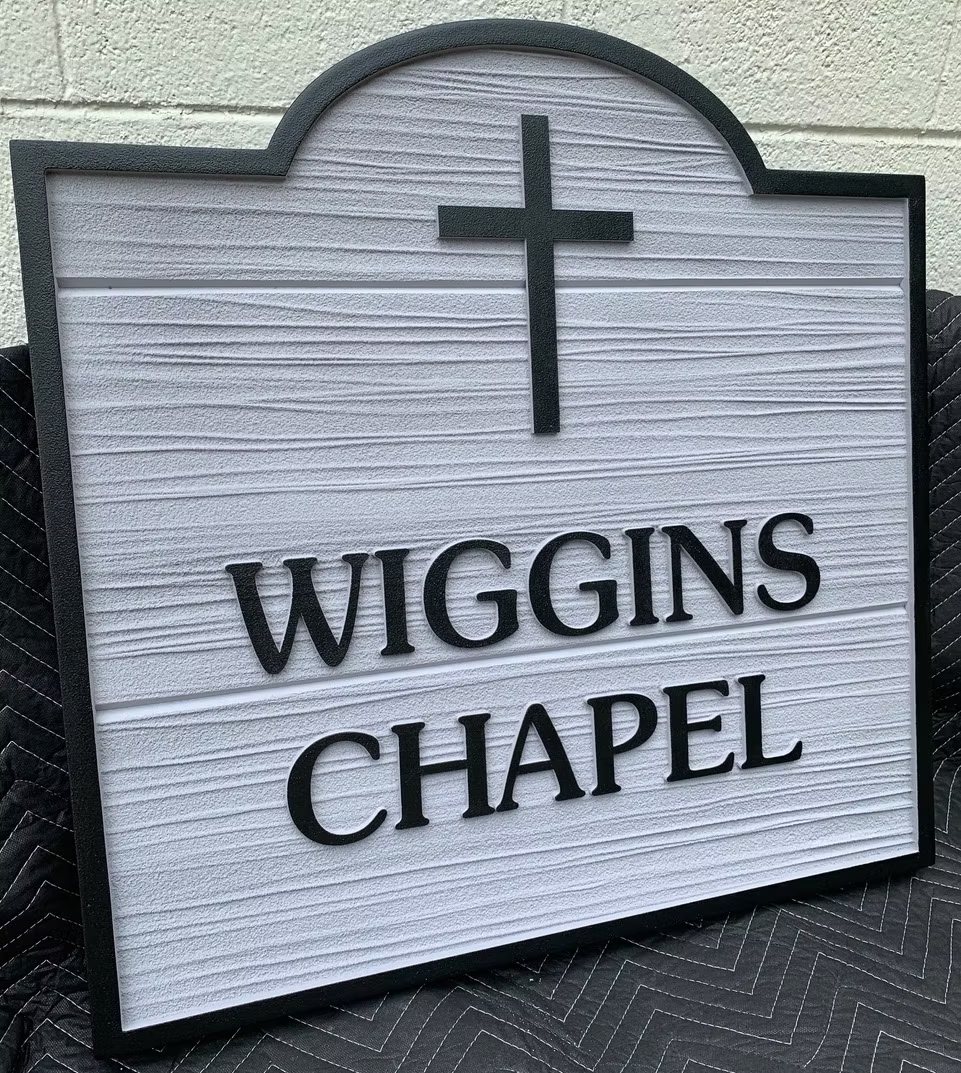
The architecture should guide the style. A historic chapel may suit a shaped panel with traditional lettering, while a contemporary worship center may prefer clean dimensional letters and a simple logo. HDU can support both because the surface, shape, border and finish determine the visual character.
- Primary congregation name
- Denomination or affiliation as supporting copy
- Separate directional and parking signs
- Crests, crosses and dimensional emblems
- Traditional or contemporary styling
Routed Panels and Dimensional Names
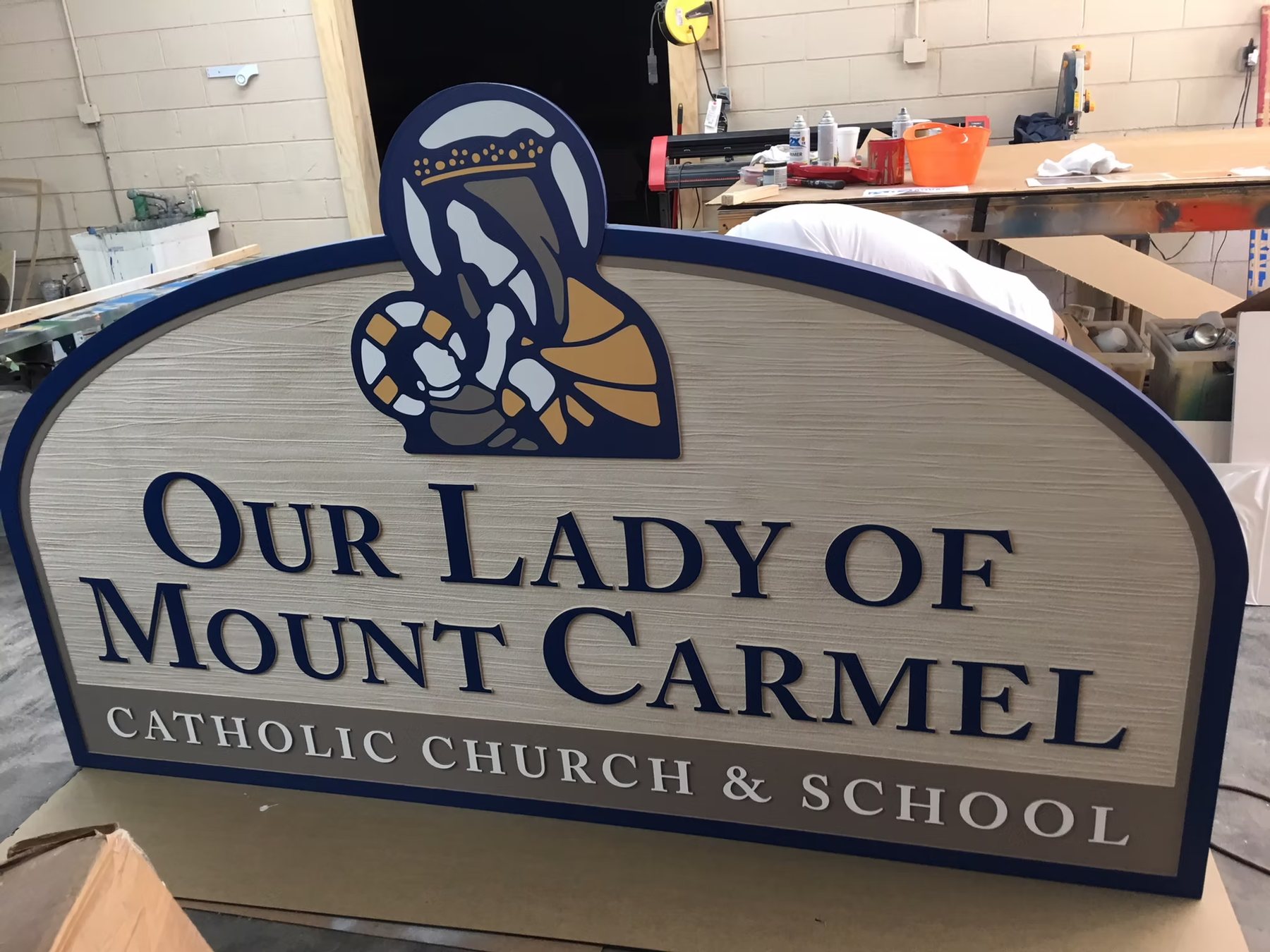
Routed HDU panels can combine a shaped face, raised border, recessed background and dimensional copy. They are useful for roadside entrances, building identification and freestanding post signs. Individual dimensional letters may be better when the building façade itself should remain visible behind the name.
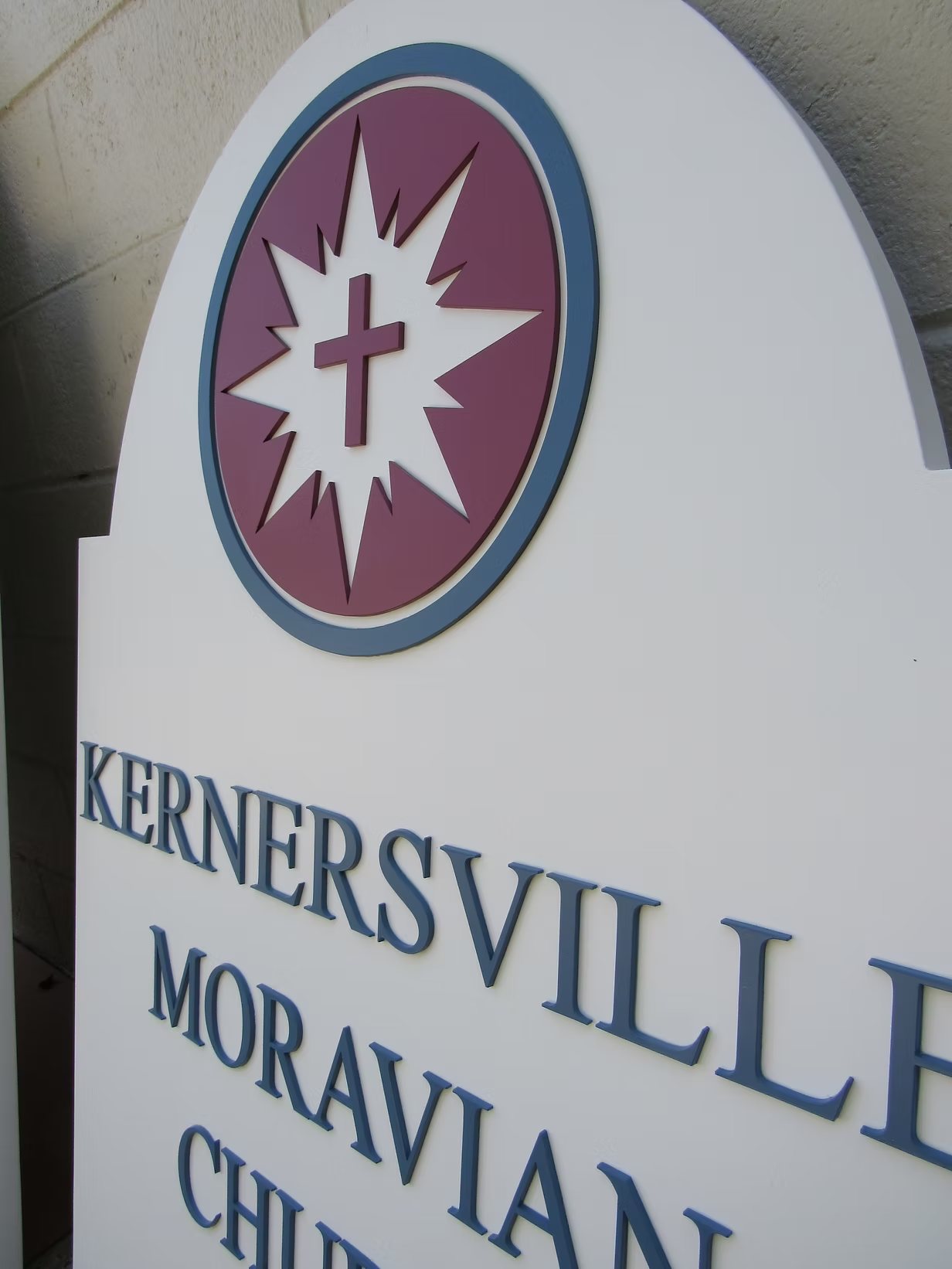
We can manufacture a complete panel or the individual parts required by a local installer. The project should specify whether crosses, seals or logos are routed into the face, left raised or produced as separate applied pieces. This affects depth, paint separation and packing.
- Carved-style entrance panels
- Building-mounted dimensional letters
- Applied crosses and seals
- Directional and parking panels
- Replacement monument faces
Readability, Color and Respectful Design
Church signs are often placed near roads, driveways and landscaped entrances. Letter height and contrast must work from the actual approach. Script can be appropriate for a short church name, but long or highly decorative lettering may be difficult to read at speed. Secondary wording should remain visibly subordinate.
Color choices can reference stained glass, denominational identity, stonework or existing trim. A restrained palette usually looks more permanent than many small colors. When gold or metallic effects are requested, we discuss the visual goal and appropriate finish rather than assuming a screen color will translate directly to paint.
- Lettering sized for the road approach
- Strong contrast against the background
- Limited and coordinated color palette
- Respectful use of religious symbols
- Secondary information kept readable
Replacing a Sign and Planning With a Committee
An older sign may have sound posts or masonry but a failing face. Replacing the panel can refresh the identity while preserving the site structure. The local installer should inspect the frame, measure the opening and confirm how the old face is retained. Photographs alone cannot establish exact fit.
Church projects frequently involve a pastor, facilities team, trustees and design volunteers. Choose one authorized person to collect feedback and approve the production drawing. Exact spelling, founding dates and denominational names deserve careful review before fabrication. Local permit research, electrical work, posts, masonry and installation are handled separately.
- Measure existing openings and retainers
- Inspect posts and structure locally
- Choose one authorized contact
- Approve dates and names carefully
- Coordinate installer before ordering
How a Project Moves From Idea to Shipment
A successful custom sign order is a controlled manufacturing process rather than an instant print job. The first step is identifying the finished result: what the sign or letters must say, where they will be used, the overall size, quantity, visual style and delivery location. Direct business customers can describe the appearance in ordinary language. Sign shops can provide technical specifications, vector files and production notes. Either approach is acceptable as long as the final scope becomes clear before cutting begins.
We review the information for manufacturability and quoting. That review may identify narrow letter strokes, unsupported areas, unrealistic depths, incomplete dimensions or artwork that needs to be converted into clean vector paths. The written quote states the component being supplied, material, thickness, finish, quantity, packaging and shipping. An approval drawing or documented specification then becomes the production reference. The customer should check spelling, dimensions, colors, quantities and sidedness carefully because custom products are manufactured specifically for that order.
After approval and payment requirements are completed, material is allocated and the project enters production. CNC work may include outside profiling, pocket routing, v-carving, texture, holes and separate dimensional layers. Parts are sanded and prepared for the finish listed in the quote. Completed work is inspected, photographed when appropriate and packaged to protect edges and painted surfaces. Shipment details are provided according to the agreed delivery method. Field measurements, permits, structural supports and installation remain the responsibility of the customer or installer unless those services are expressly included in writing.
Information That Helps Us Quote Accurately
A photograph or rough idea is enough to begin a conversation, but accurate pricing requires specifics. Include the exact finished width and height, quantity, whether the sign is single- or double-sided, and whether you need raw components or a fully finished product. Supply the best logo file available and list every paint color by code when possible. For replacement faces, provide straight-on photographs, the opening measurements, recess depth and mounting details. For dimensional letters, include the desired letter height, overall line width and installation surface.
Shipping can influence construction and packaging, especially for large panels or fragile shapes. Include the delivery ZIP code, whether the location is commercial or residential, and whether a loading dock or forklift is available for freight. Also tell us the required date. A requested date is not guaranteed until production and transit are confirmed, but early notice helps identify the correct shipping method. Complete information reduces back-and-forth, prevents assumptions and produces a quote that clearly states what will arrive.