What a Routed Panel Can Do
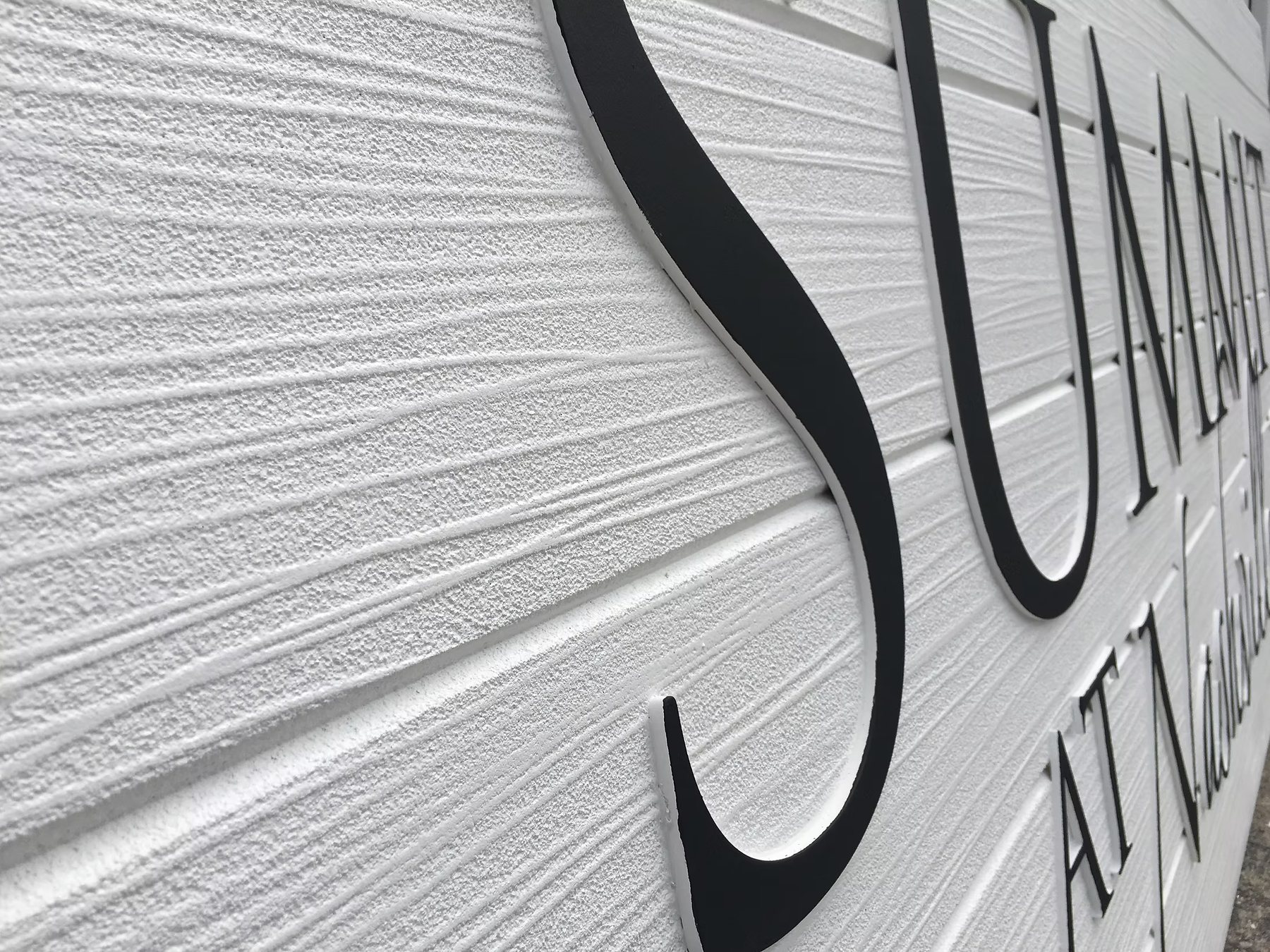
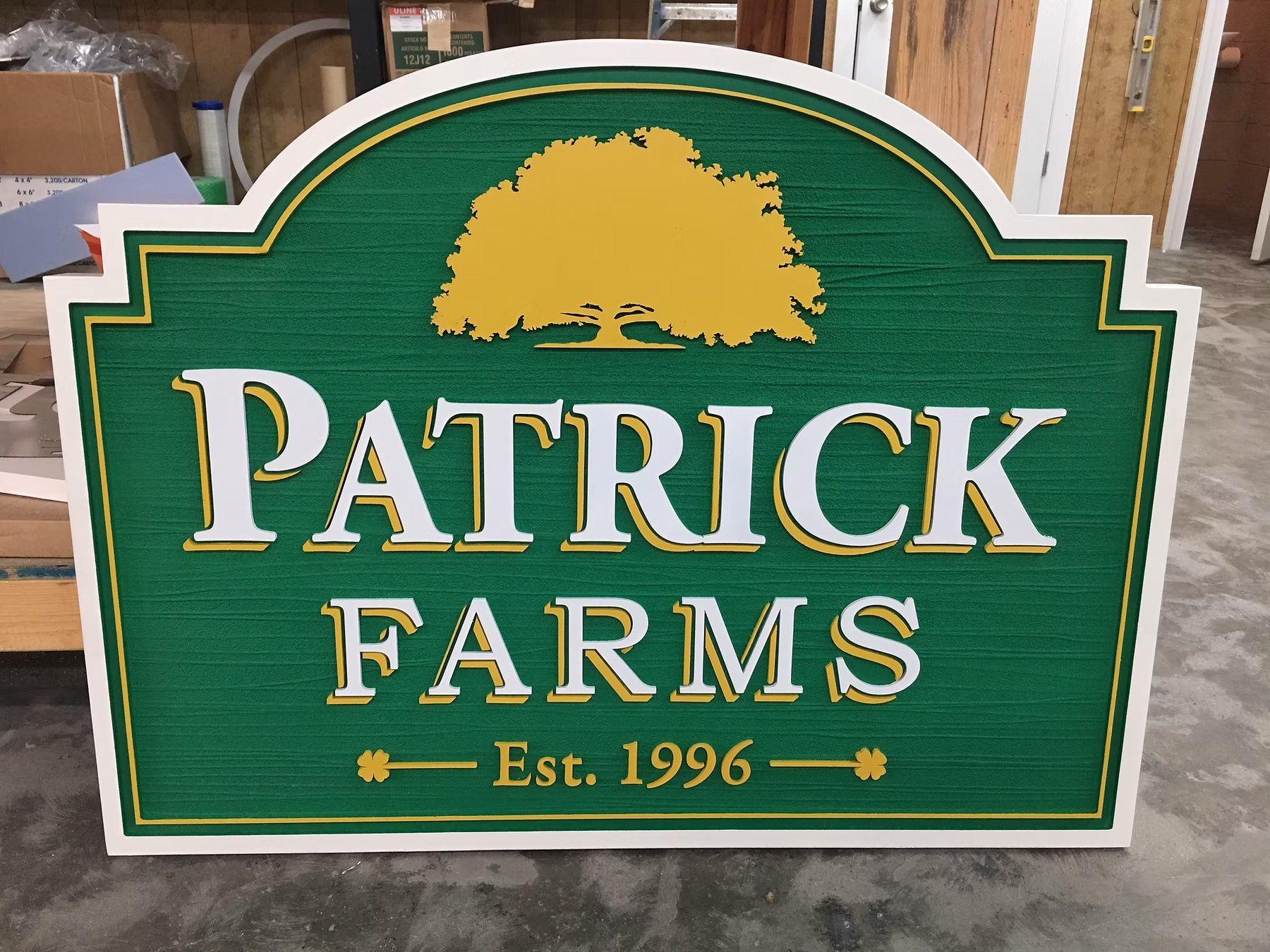
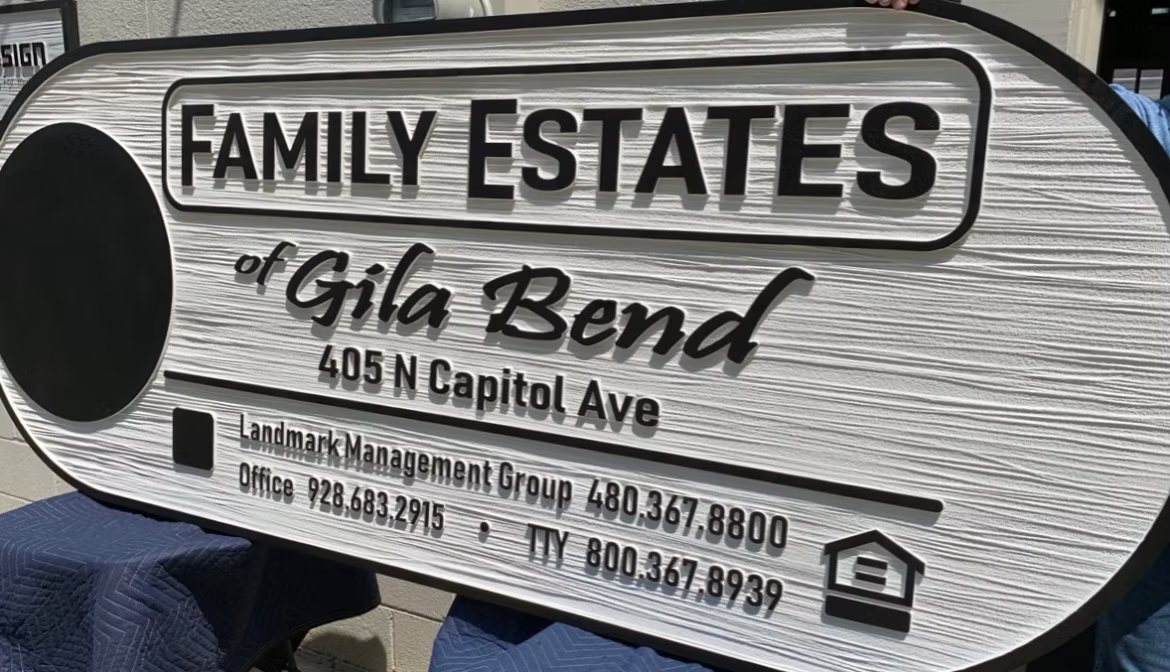
CNC routing removes selected areas of the panel to create depth. The machine can pocket a background around raised letters, recess lettering into the face, cut a border, shape the outside perimeter or create a repeatable texture. These operations can be combined with separately cut letters and logo pieces for a more dimensional result.
The design should use depth intentionally. Too many layers can make the message difficult to read and expensive to finish. A strong panel normally has a clear primary message, one supporting level and controlled decorative detail. We review the file for tool access, minimum feature sizes and practical paint separation before manufacturing.
Raised Copy Versus Recessed Copy
Raised copy is created by routing the surrounding background lower while leaving letters and graphics at the original face height. It produces a carved-sign appearance and can make the main name feel substantial. Recessed copy is cut into the face of the panel. It is often cleaner and simpler to paint, especially when the recessed areas are filled with a contrasting color.
The choice depends on the brand style, letter size and viewing distance. Fine serif lettering may not be suitable for deep raised routing, while bold copy can carry stronger relief. Recessed details must be wide enough for the selected cutter. We can identify file features that need to be enlarged, simplified or changed to an applied element.
Routed sign options at a glance
| Choose the detail | What we can make |
|---|---|
| Material | 15-pound sign-grade HDU, routed to your design. |
| Panel thickness | 1 inch, 1.5 inches or 2 inches. The carve depth and mounting help determine the right choice. |
| Size and shape | Panels up to 5 × 10 feet, with the finished shape, support and shipping requirements reviewed before production. Rectangles, arches, ovals and custom outlines are available. |
| Finished sides | Single-sided or double-sided. Tell us if the wording differs between the two faces. |
| Lettering and background | Raised letters, recessed copy, carved borders, smooth backgrounds or routed woodgrain. Separate acrylic letters can add another layer. |
| Finish | Raw for your shop to finish, primed, or fully painted. Send Sherwin-Williams color codes or your existing paint references. |
Thickness is the starting board thickness, not the depth of the carving. For example, routing half an inch into a 1-inch board leaves half an inch behind that pocket. We plan the remaining material, letter detail and attachment points together before cutting.
For a hanging sign or a wide span between posts, send a photo or drawing of the support. We can quote the agreed mounting preparation; your installer confirms the support and attachment for the location.
Artwork That Routes Cleanly
A production file needs closed vector shapes, clean overlaps and a known scale. Fonts should be converted to outlines so the file does not change when opened on another system. Lines that represent a border must have real width; a hairline stroke is not automatically a routable channel. Identify intended depths and which areas remain raised.
A rendering alone does not tell the machine where to cut. Include a dimensioned drawing or notes that separate visual color from physical depth. For complex signs, a simple layer key—background, raised copy, recessed detail, applied part—can prevent confusion. Routed panels are used for subdivision entrances, churches, farms, professional offices, parks, restaurants and replacement monument faces.