Best Materials for Carved Logos on Exterior Signs
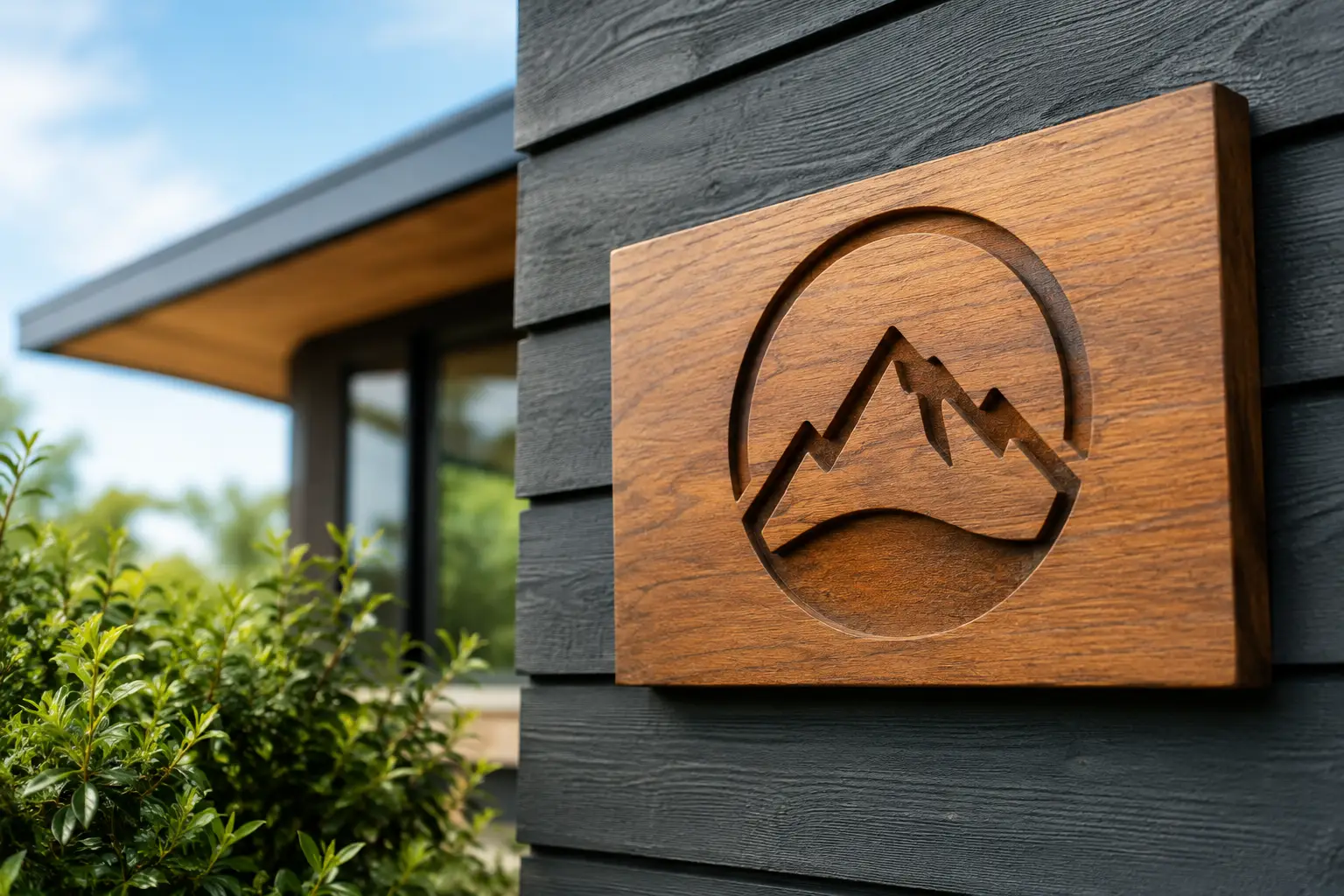
A carved logo has to do more than look good in a close-up proof. It needs to hold its shape, paint cleanly, create readable contrast, and remain credible after years of sun, rain, temperature changes, and routine cleaning. The best materials for carved logos depend on the logo’s line detail, required relief depth, mounting location, viewing distance, and the finish the project calls for.
For many exterior applications, the material decision should begin with the type of carving desired. A shallow engraved mark, a sandblasted wood-grain background, and a deeply routed emblem with raised copy do not place the same demands on a sign panel. Choosing a material only by initial cost can lead to weak detail, visible movement, premature finish issues, or a logo that loses definition at the distance where people actually see it.
What a Carved Logo Material Must Do
A suitable substrate must machine predictably. CNC routing creates the cleanest results when the material holds a consistent depth, supports crisp edges, and does not chip or tear away around small features. It also needs enough thickness for the intended recess, raised border, or layered construction.
Exterior stability matters just as much. Natural materials can move with moisture and temperature changes. Some plastics expand noticeably in heat. Metals offer excellent durability but may require a different fabrication approach when the artwork relies on broad carved fields or sculpted texture. The correct choice is not always the hardest material. It is the material that supports the approved design and its real-world exposure.
Paint and finish requirements also affect the specification. A logo with multiple colors, a metallic face, or a dimensional highlight may benefit from a combination of materials rather than a single routed panel. Clear contrast between the carved background and raised elements is usually more valuable than adding complexity that cannot be seen from the street.
Best Materials for Carved Logos: HDU
For carved exterior logos, 15-pound sign-grade high-density urethane, commonly called HDU, is often the most practical primary material. It is manufactured specifically for routing and sign fabrication. Unlike wood, it does not absorb moisture, rot, split, or develop grain movement that can distort a carved field over time.
HDU machines cleanly into V-grooves, recessed logo areas, faux wood grain, prismatic borders, and raised lettering. It is particularly effective when the design needs visual depth without the weight of a thick wood panel or solid metal sign. A routed HDU panel can also be shaped with custom profiles and edge treatments that make an entrance sign or monument replacement face feel purpose-built rather than flat.
The 15-pound density is a useful standard for exterior routed signage because it provides a durable carving surface while remaining practical to fabricate and ship. It is not structural material, however. HDU should be supported by the appropriate frame, substrate, or mounting system for the application. The customer or installer must verify wall conditions, post structure, fastener selection, and all site measurements before installation.
HDU does require a proper finishing system. Routed surfaces, edges, and faces should be sealed and coated according to the specified finish process. When manufactured correctly, HDU offers a stable foundation for painted carved logos in applications such as church signs, property entrance signs, HOA monument signs, commercial identity panels, and dimensional logo components.
Its main trade-off is the finish expectation. HDU is excellent for painted dimensional work, carved texture, and wood-look effects. If the project requires the natural reflectivity of brushed aluminum, polished stainless steel, or a precision-cut metal face, a hybrid construction may be a better fit.
PVC for Simple Routed Shapes and Panels
PVC is a closed-cell plastic sheet commonly used for dimensional letters, flat logo components, and routed panels. It is moisture-resistant and generally economical for applications that do not require deep carving or heavily textured surfaces.
For a logo made of bold shapes, shallow recesses, or painted letters mounted to a background, PVC can be a practical option. It is available in different thicknesses and can create clean, consistent components when the artwork is not overly intricate. It is also lighter than many metal alternatives, which can simplify handling during installation.
PVC is less suitable when a design relies on dramatic carved relief, sculpted texture, or fine pointed details. It can also expand and contract with temperature swings, so mounting provisions and panel dimensions must account for that movement. Very large PVC panels, especially in direct sun, require careful planning around attachment points and trim clearance.
Use PVC where flatness, lightweight construction, and straightforward painted forms matter more than deep routed character. It is not a direct substitute for HDU when the design is intended to look carved or artisan-fabricated.
Acrylic for Color, Gloss, and Layered Detail
Acrylic brings a different strength to carved-logo projects. It is usually selected for its smooth surface, consistent color, glossy appearance, or translucent visual properties rather than for deep carving. Opaque acrylic can provide sharp color fields in a layered logo, while clear or translucent acrylic may be used where a project needs a polished accent or a non-illuminated glass-like effect.
For exterior signs, acrylic works well as a face layer, inset element, or dimensional logo component attached to an HDU, PVC, or metal-backed panel. A dark routed HDU background with raised acrylic logo pieces, for example, can create strong contrast and clean separation between the carved field and the brand mark.
Fine internal cuts must be evaluated carefully. Thin acrylic strokes and delicate unsupported features can be vulnerable during fabrication, shipping, and installation. Acrylic can also show scratches more readily than a textured or painted surface. For that reason, it is usually best used where the logo has adequate stroke width and the finish calls for crisp, polished geometry.
Metal-Faced Elements for a Premium Contrast
Metal-faced components are useful when a logo needs a finish that paint alone cannot reproduce. Brushed aluminum, painted aluminum composite, stainless-look surfaces, and other metal-faced materials can add a precise architectural appearance to dimensional branding. They are often integrated as logo faces, letters, borders, or inset panels rather than used for the entire carved substrate.
A metal face can create excellent contrast against a carved HDU background. This combination allows the background to carry the routed texture and dimensional profile while the logo face provides a clean, durable visual focal point. It is especially effective for professional offices, commercial properties, municipalities, and organizations seeking a more contemporary sign finish.
Metal adds fabrication considerations. Edges, returns, attachment methods, and potential surface distortion all need to be defined before production. A metal-faced element is also less forgiving of inconsistent artwork. Small gaps, uneven spacing, or unapproved font substitutions can become more visible when the finished surface is smooth and reflective.
Match the Material to the Logo Geometry
The logo itself should guide the material choice. Broad shapes, simple arcs, and heavy lettering give a fabricator more options. Fine script, small counters inside letters, narrow strokes, and closely spaced details may require a larger final size, a shallower carve, or a simplified version of the mark for exterior production.
A carved logo should be reviewed at its intended viewing distance. Detail that looks impressive on a monitor may disappear from a parking lot or roadway. In many cases, reducing the number of internal cuts and increasing contrast between the logo and background produces a better finished sign than attempting to reproduce every element of a print-scale graphic.
Vector artwork is preferred for this review. AI, EPS, SVG, and print-ready PDF files generally provide the clearest path to accurate routing. Fonts should be outlined, and the supplied artwork should identify final dimensions, color codes, desired recess depth, border width, and any separate layers. If the logo includes a trademark symbol or small secondary copy, its actual fabricated size should be confirmed before the job moves into production.
Specify the Finish and Attachment Early
Material selection cannot be separated from how the logo will be finished and mounted. A routed panel may need painted edges, a contrasting recessed area, stud-mounted letters, adhesive-mounted acrylic, or mechanical fasteners concealed behind face components. Each method affects thickness, clearances, shipping protection, and installation preparation.
Provide the finished sign size and any required mounting information at the quoting stage. If the carved logo is replacing an existing monument face, verify the opening dimensions, overall panel thickness, frame reveal, and attachment locations in the field. A replacement face that is accurately fabricated to unverified measurements can still create an installation problem.
A written scope should identify what is being manufactured: material type and thickness, routed features, paint colors, applied components, hardware if included, and packaging expectations. It should also distinguish fabrication from structural work, permitting, electrical work, and installation unless those services are specifically included.
The strongest carved logos are not defined by one material alone. They are defined by a material system that supports the logo’s shape, depth, color contrast, and mounting conditions. Start with the detail people need to recognize from a distance, then select the substrate and finish that can reproduce it accurately for the life of the sign.