Guide to Painted Sign Finishes That Last
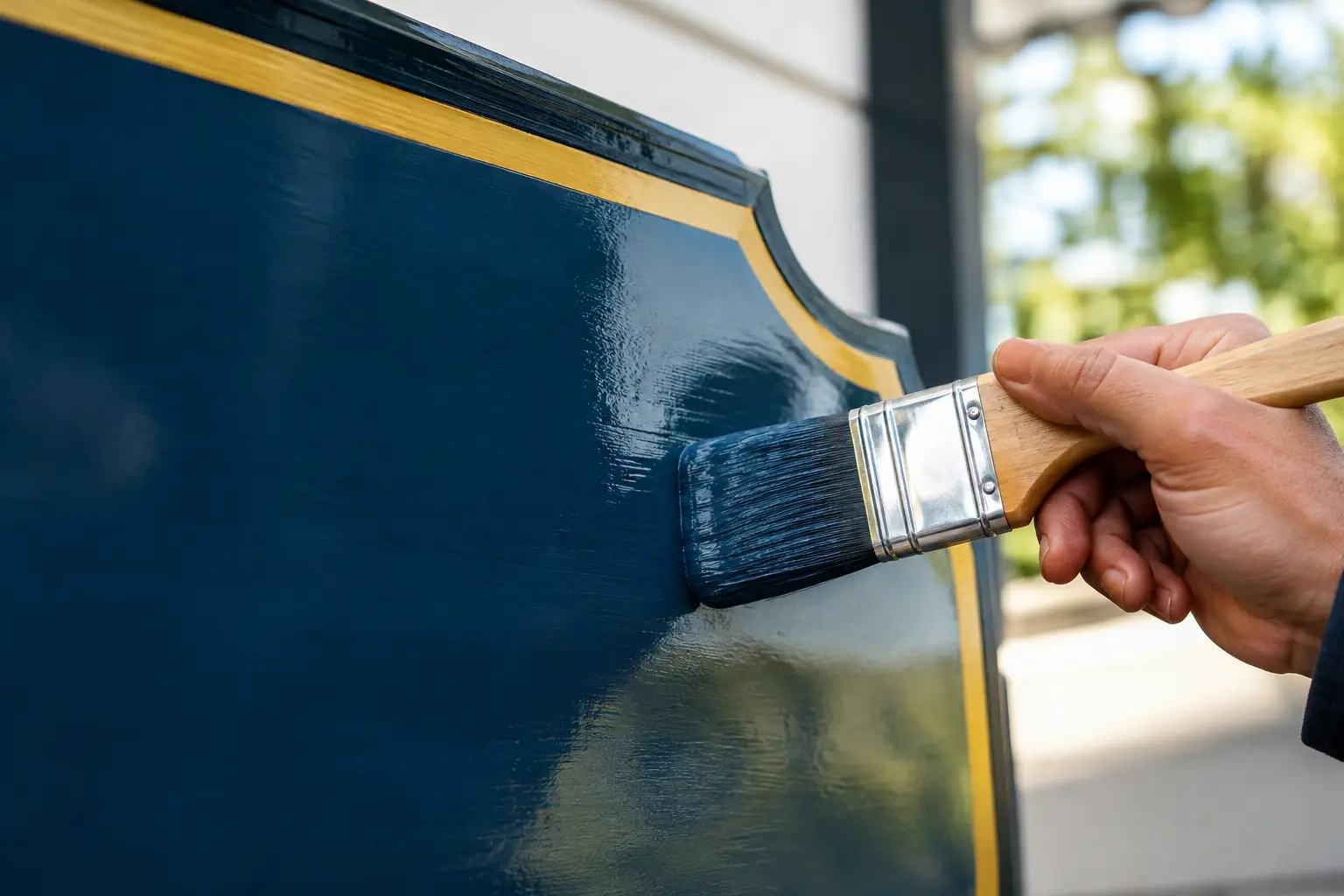
A painted exterior sign can look precise in an approved proof and still disappoint after installation if the finish was not specified for the material, profile, viewing distance, and exposure. This guide to painted sign finishes explains what changes the appearance and service life of dimensional signs, routed panels, entrance signs, and replacement monument faces - before fabrication begins.
Start With the Sign Material and Surface Profile
Paint is only one layer of the finished result. The substrate determines how the paint system bonds, how much surface preparation is needed, and which details can be reproduced cleanly.
For many exterior dimensional signs, 15-pound sign-grade HDU provides a stable paint-ready base. Unlike natural wood, it does not have grain movement, knots, or the same risk of checking and splitting. That makes it well suited to routed backgrounds, raised lettering, carved borders, and textured effects. It does not mean every HDU surface should receive the same finish. A deep carved panel, for example, needs a different paint approach than smooth-cut building letters.
Acrylic, PVC, and metal-faced components may also be appropriate when a project calls for a specific sheen, thin profile, contrast edge, or metallic appearance. These materials have different preparation and adhesion requirements. The material should be identified in the written scope rather than assumed from an artwork rendering.
Surface profile matters just as much. A smooth panel produces cleaner reflections and a more contemporary appearance. A blasted or routed texture breaks up the surface and can make a large property sign feel more architectural. Raised letters create natural shadow lines, which can improve contrast even when the face and background colors are relatively close. The best choice depends on the sign’s setting, letter size, and expected viewing distance.
Choose the Painted Sign Finish for Its Job
A finish should support readability first, then style. A color combination that looks refined at arm’s length can become weak from a parking lot or roadway. Likewise, a dramatic texture can suit a monument sign but interfere with small copy if it is applied across the entire panel.
Smooth painted finishes
A smooth painted finish is common for dimensional letters, logos, routed sign panels, and replacement faces. It presents color cleanly and works especially well with modern branding, crisp vectors, and simple architectural forms. Smooth finishes are generally easier to keep visually consistent across a multi-part sign, provided the approved color specification is clear.
The trade-off is that smooth surfaces reveal imperfections more readily. Small chips, scuffs, or uneven mounting surfaces may be more noticeable than they would be on a textured sign. This is one reason finish quality depends on both factory preparation and careful handling during installation.
Textured and carved finishes
Texture adds depth without requiring extra materials or excessive thickness. A routed woodgrain effect, for example, can give HDU the character of a traditional carved wood sign while avoiding natural wood’s instability. Stone-like, sandblasted-style, and stippled textures can also establish contrast between a background field and raised copy.
Texture should be intentional. Fine textures may disappear at a distance, while heavy textures can compete with small lettering. On a sign read primarily from a vehicle, use texture to support the larger composition, not to carry critical information. The organization name, directional message, address, and logo should remain visually clear.
Matte, satin, and gloss appearance
Sheen changes how a sign reads under daylight, landscape lighting, and vehicle headlights. A lower-sheen finish reduces glare and often works well for exterior sign backgrounds. Satin provides a controlled amount of reflectivity and is a practical choice for many dimensional components. Higher-gloss appearances can make certain colors feel more vivid, but they also show reflections, surface marks, and irregularities more easily.
There is no universal rule that matte is more durable or gloss is more premium. The appropriate sheen depends on the product, location, maintenance expectations, and desired architectural character. Specify the intended appearance during approval rather than relying on a monitor image, which cannot reliably show real-world sheen.
Primer, Paint Coverage, and Edge Treatment Matter
A durable painted finish begins with surface preparation. HDU, acrylic, PVC, and metal-faced elements do not all accept coatings in the same way. The fabrication process should account for the material and include the necessary preparation before finish coats are applied.
Primer creates a suitable base for paint adhesion and consistent color coverage. It is particularly important on routed HDU surfaces, including letter returns, carved recesses, and sharp transitions where bare material may otherwise show through. Deep profiles require attention because corners and inside edges can receive less coverage than broad, flat faces.
Color selection also affects coverage. Bright whites, yellows, reds, and certain light colors may require additional coating steps to achieve an even appearance over a dark base or contrasting substrate. This does not make those colors unsuitable. It means the finish process should be planned around the selected color rather than treated as an afterthought.
Edges deserve specific attention. A dimensional letter has a face and returns, and those surfaces can be painted alike or used to create contrast. For example, dark returns with lighter faces can strengthen perceived depth. A panel with a painted background and unpainted metal-faced letters can create another form of contrast. These choices should be shown in the approved artwork and described in the scope, including which surfaces receive which colors.
Specify Colors in a Way Production Can Use
“Blue,” “bronze,” or “church green” are design directions, not production specifications. For a custom painted sign, provide recognized color references whenever possible. Pantone references, manufacturer color names and numbers, or clearly identified paint standards reduce ambiguity. If brand standards include a color formula, provide that information with the artwork package.
Colors can still appear different outside than they do in a digital proof. Sun exposure, surrounding masonry, landscaping, sky conditions, and sign orientation all influence perception. Dark colors may absorb more heat, while very light colors can show roadside dirt or irrigation staining more quickly. Metallic-looking effects may vary with angle and lighting, especially when incorporated into metal-faced or specialty components.
When color match is critical, say so before fabrication. A written approval process should identify the requested color, finish approach, and which elements are included. The approved proof is the reference for layout and component relationships, while the written scope should define materials, dimensions, paint colors, recesses, and attachment preparation.
Design for Exterior Exposure and Real Maintenance
Exterior signage encounters UV exposure, rain, humidity, airborne debris, lawn equipment, cleaning chemicals, and accidental contact. In Georgia and across much of the United States, heat and moisture can be especially demanding on exposed signs. A well-made finish helps, but no painted surface is immune to impact damage or neglected maintenance.
Sign location should influence finish decisions. A sheltered wall sign may allow more flexibility than a freestanding entrance sign exposed on all sides. A monument sign beside a mower route needs clearance from landscaping and irrigation overspray. A panel installed near a coastal environment, pool chemicals, or heavy traffic may require additional consideration around component selection and maintenance.
For cleaning, use mild soap, water, and a soft cloth or sponge. Avoid abrasive pads, harsh solvents, and pressure washing at close range, particularly around dimensional edges and seams. Periodic inspection is practical for large entrance signs and multi-tenant properties. Look for impact marks, failed sealant at installation interfaces, loose mounting hardware, and persistent water paths that should be corrected before they affect the sign assembly.
Coordinate Finish Decisions With Fabrication and Installation
Painted finishes are affected by decisions made before the first routed part is cut. Vector files are preferred for logos and lettering, and fonts should be outlined before submission. Final dimensions, layer relationships, border widths, recess depths, and mounting methods should be confirmed early, because each can change where shadows fall and how colors are seen.
The customer or installer must verify field measurements, mounting conditions, and local code requirements. A manufacturer can fabricate the approved sign components accurately, inspect them, and package them for shipment, but site preparation and installation conditions remain separate responsibilities unless specifically included in the quote. This distinction matters when a finish is damaged by an uneven wall, incompatible adhesive, fastener placement, or jobsite handling.
At HDU Signs, the clearest projects begin with artwork and a written scope that state what will be produced. That gives owners, designers, installers, and sign professionals a common reference before paint colors and finish details reach the production floor.
A painted sign finish should make the organization easier to recognize, not merely make the sign more decorative. Choose the finish that supports the material, the architecture, and the distance from which people actually need to read it.