HDU or Acrylic: Which Sign Material Fits?
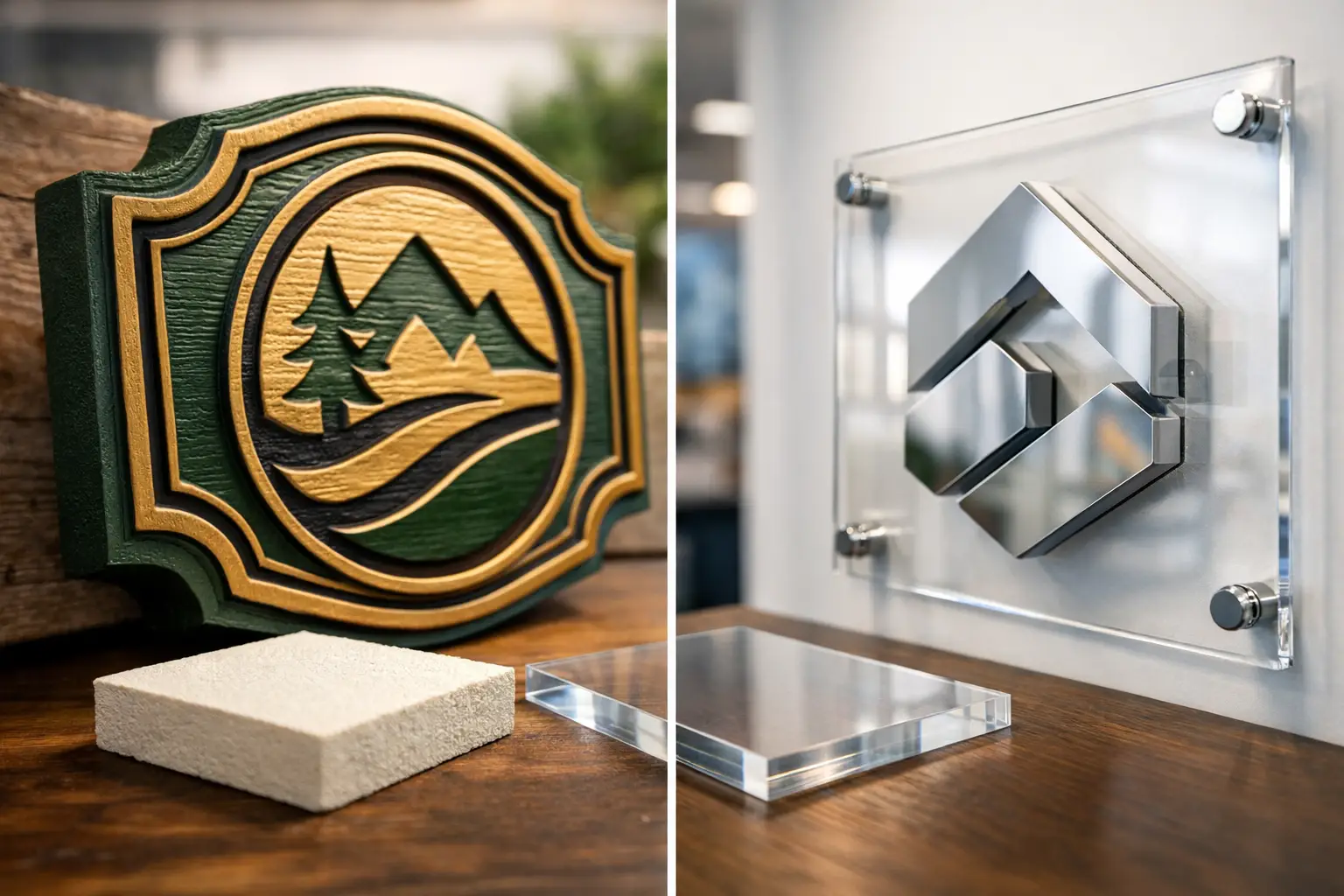
A sign can look appropriate in a rendering and still be the wrong material for its location, viewing distance, or fabrication method. The question is not simply HDU or acrylic. It is whether the finished sign needs carved depth, a painted architectural surface, crisp glossy letter faces, lightweight components, or a combination of those qualities. Material selection affects the appearance of the sign on day one and the work required to keep it looking right outdoors.
For dimensional letters, routed panels, entrance signs, and monument replacement faces, the best choice starts with the intended function. A storefront logo mounted close to the viewer has different needs than a property entrance sign viewed from a vehicle. The material should support the design, the mounting method, and the level of exterior exposure rather than forcing the project into a generic solution.
HDU or acrylic: Start with the sign's job
High-density urethane and acrylic are both useful sign materials, but they do different work well. HDU is a rigid, closed-cell urethane board that can be CNC routed, carved, shaped, and painted. Sign-grade 15-pound HDU is commonly selected for exterior dimensional sign panels, carved backgrounds, raised borders, and custom profiles where a substantial, crafted appearance matters.
Acrylic is a hard plastic sheet material often used for dimensional letters, logos, color faces, and layered components. It offers clean edges, consistent thickness, and colors or finishes that can be difficult to duplicate with paint alone. Depending on the grade and finish selected, acrylic may be glossy, matte, translucent, opaque, or specially colored.
Neither material is automatically better. A sign with a deep sandblasted-style texture and raised copy points toward HDU. A clean lobby logo with polished black letters or a bright color face may point toward acrylic. Exterior use adds another layer of decision-making: thickness, paint system, attachment method, substrate, drainage, sun exposure, and the ability to service the sign later all matter.
When HDU is the stronger choice
HDU is especially effective when the sign design relies on routed detail. It can be cut with recessed backgrounds, raised lettering, borders, bevels, V-carved copy, decorative profiles, and custom textures. Because the material is stable and does not have the grain movement, splitting, or rot concerns of natural wood, it gives designers the visual character of a carved sign without relying on wood as the structural face.
For an entrance monument, church sign, residential community identifier, or professional office panel, that depth can improve readability and presence. A routed background creates shadow lines around raised elements. Those shadows help the design read from a distance, particularly when the color contrast is controlled and the letter size is appropriate for the viewing conditions.
HDU also works well when a project needs a painted finish matched to specified colors. The panel can be primed, finished, and detailed with separate colors for the field, border, copy, and logo areas. This makes it practical for branding programs that require a specific color code rather than an off-the-shelf sheet color.
Its limitations should be addressed honestly. HDU is not intended to act as a structural post or a substitute for a properly engineered support system. A large panel still needs suitable backing, framing, or mounting provisions based on its size and site conditions. It also needs a suitable exterior coating system and careful finishing at routed edges. The customer or installer must verify field measurements, mounting surfaces, structural requirements, and local permit requirements before installation.
When acrylic is the better fit
Acrylic is often the right choice when the design needs sharp, modern dimensional elements. It is commonly used for flat-cut letters, logos, and layered accents where a smooth, consistent surface is the priority. A set of acrylic letters can provide a clean result on an interior feature wall, reception area, storefront fascia, or exterior wall when the specified thickness and attachment method match the conditions.
Acrylic can also simplify certain color and finish requirements. Gloss black, white, clear, frosted, and standard color sheets offer a distinct visual effect that painted HDU may not replicate in the same way. Clear acrylic can be back-painted or layered over printed and painted components. Frosted acrylic can soften an interior logo treatment. Opaque acrylic faces can create high-contrast dimensional copy.
The trade-off is that acrylic does not create the same carved, dimensional panel effect as HDU. It can be routed and layered, but it is generally used as a clean-cut component rather than as a deep, sculpted sign face. It may also show surface scratching more readily in some finishes, and dark colors can become especially hot in direct sun. Large acrylic pieces require attention to thickness, expansion, mounting hole placement, and support to avoid stress cracking or distortion.
For exterior projects, acrylic selection should be specific. “Black acrylic letters” is not enough production information. The quote and approved artwork should identify the thickness, finish, face color, edge treatment, mounting pattern, and whether the letters are intended to be flush mounted, stud mounted, or attached to another panel. Those details determine what can be fabricated and what the installer will need at the site.
Matching the material to common sign types
A property entrance sign usually benefits from HDU when the goal is a substantial panel with a routed background, raised copy, decorative border, or dimensional seal. The material can support the traditional, institutional, or architectural character many communities, churches, and office parks want at an entrance. Acrylic may still be included as a separate logo layer or color accent.
For building letters, acrylic is often a practical answer when the letters are simple, high contrast, and mounted individually to a wall or raceway. HDU letters are possible where a thicker, painted, more sculpted letter profile is part of the design. The question is whether viewers should see a precise flat-cut letter face or a routed letter with deeper visual weight.
Replacement monument faces require a closer look at the existing cabinet or frame. HDU may be suitable for a routed, painted replacement panel, while acrylic may be used for flat dimensional elements or certain face treatments. The existing opening dimensions, thickness clearance, attachment points, and drainage conditions should be confirmed before fabrication. A replacement face that is visually correct but does not fit the existing structure is not a successful replacement.
For exterior logos and branded wall signs, layered construction often provides the strongest result. An HDU base panel can provide the routed depth and painted background, while acrylic or metal-faced logo components add crisp color, reflective detail, or a different surface character. This approach is useful when the brand mark contains fine geometry that needs to remain clean at close range.
Consider a mixed-material sign when the design calls for it
The choice does not always have to be HDU or acrylic alone. Many effective signs use each material where it performs best. A routed HDU panel can carry the field color, border, and carved texture. Acrylic letters can sit on top as a distinct color layer. Metal-faced elements can add a brushed or polished accent where the design needs contrast.
Layering must be planned, not added as an afterthought. Each component needs a defined thickness, reveal, attachment method, and edge relationship. A thin acrylic logo mounted over a deeply routed HDU background may look intentional. The same logo with insufficient contrast or no clearance from a border may disappear at the intended viewing distance.
This is where approved artwork should show more than a front elevation. For dimensional work, a production-ready design identifies layer order, recess depth, overall thickness, copy height, color specifications, and any areas requiring separate fabrication. Vector files are preferred, and fonts should be outlined before production so letter forms and spacing remain fixed.
Specify the details that protect the finished result
Material selection becomes reliable when the project scope is clear before routing begins. At minimum, provide the overall finished dimensions, the sign's intended location, a vector logo or artwork file, color information, and photographs or measurements of the mounting area when the sign must fit an existing condition.
For a routed HDU sign, also define the panel thickness, background treatment, raised or recessed copy, border layout, and desired finish. For acrylic components, define the material thickness, face color or finish, edge appearance, and mounting preparation. If letters are to be stud mounted, the pattern and stud locations should be coordinated with the installer and the receiving surface.
Readability deserves the same attention as material. Letter height, stroke width, contrast, and spacing determine whether people can identify the property or business at the actual viewing distance. Fine decorative lettering may look attractive on a proof but lose clarity from a roadway. Deep routing cannot correct copy that is too small, and a glossy acrylic face cannot compensate for poor contrast against the wall behind it.
A written scope keeps responsibilities visible. The manufacturer can fabricate, inspect, package, and ship the specified sign components. Unless expressly included, field verification, permits, structural engineering, site preparation, and installation remain the responsibility of the customer or installer. Clear division of work helps prevent surprises after the sign arrives.
The most useful material decision is the one made from the finished sign outward: what people need to see, where they will see it, how the components will be mounted, and what the exterior environment will demand over time. Once those answers are on the artwork and in the written scope, HDU, acrylic, or a carefully planned combination can be fabricated with purpose rather than guesswork.