HDU Versus Cedar Signage: Which Holds Up Better?
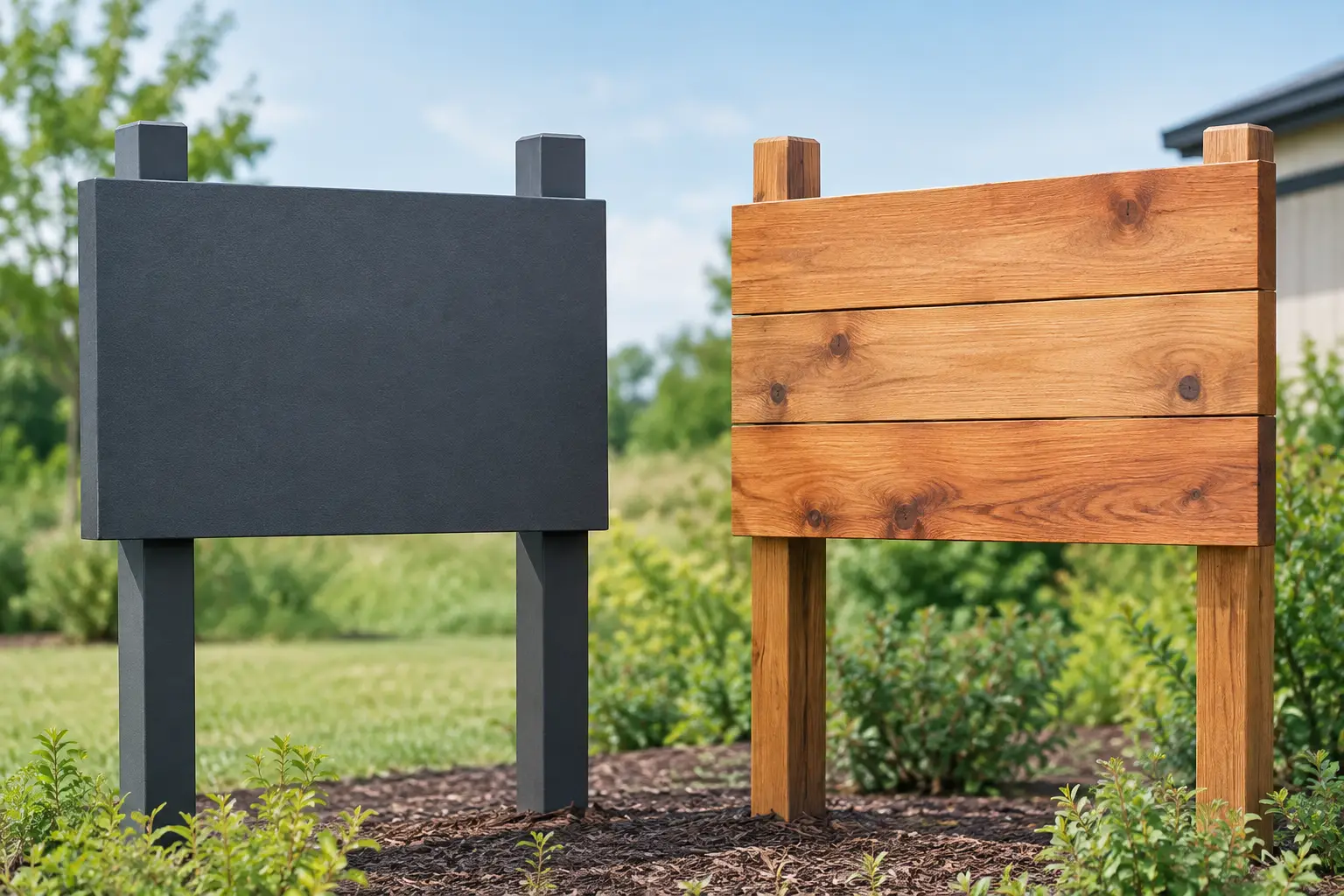
A carved entrance sign can look excellent when it leaves the shop and still become a maintenance problem a few seasons later. That is the central decision in HDU versus cedar signage: not whether either material can create a traditional dimensional look, but whether the finished sign will continue to perform under its actual exposure, finish system, and maintenance plan.
Cedar has a familiar grain, natural warmth, and a long history in carved signage. High-density urethane, commonly called HDU, is a purpose-made sign substrate that can be routed, carved, painted, and layered without the movement associated with wood. For property signs, church signs, monument replacement faces, and exterior business identification, the better choice depends on the visual intent and the conditions the sign must withstand.
HDU Versus Cedar Signage: The Material Difference
Cedar is a natural wood product. Even quality cedar boards vary in grain direction, density, knots, moisture content, and mineral staining. Those variations are part of its appeal when a project calls for authentic wood character. They also affect routing, paint absorption, joint performance, and long-term stability.
Fifteen-pound sign-grade HDU is a closed-cell urethane material made for dimensional sign fabrication. It does not absorb moisture like wood, does not have grain, and does not expand and contract with seasonal humidity changes in the same way. A routed border, recessed background, raised letter, or custom logo can therefore be machined with predictable results across the panel.
That consistency matters most when a sign has precise details. Small copy, shallow recesses, narrow borders, multi-piece dimensional elements, and paint breaks all benefit from a stable substrate. HDU also accepts textured routing patterns, allowing a fabricated sign to suggest woodgrain, stone, sandblasting, or other carved surfaces while retaining a more controlled base material.
Moisture and Movement Drive Exterior Performance
The main exterior advantage of HDU is resistance to moisture-related movement. Cedar naturally resists decay better than many other wood species, but it is not waterproof. Repeated wetting and drying can contribute to checking, cupping, splitting, open joints, and finish failure, especially along exposed edges and end grain.
A properly finished cedar sign can serve well, particularly in a protected location or where regular refinishing is expected. The issue is not that cedar automatically fails. The issue is that exterior wood requires more acceptance of natural change. In humid climates, shaded areas that remain damp, irrigation zones, and signs exposed to driving rain deserve especially careful consideration.
HDU will not rot, and it does not have end grain that wicks water. That does not mean an HDU sign is maintenance-free or immune to damage. The paint system still matters. Poorly prepared surfaces, inadequate coating coverage, impact damage, or water intrusion behind improperly sealed applied components can affect the finished sign. But the substrate itself does not introduce the same swelling and shrinking cycle that challenges exterior wood panels.
For a freestanding entrance sign or monument face, the back side and edges deserve as much attention as the visible face. Water management, mounting clearances, compatible fasteners, and proper attachment to the supporting structure all affect service life. The customer or installer must verify field measurements, structural conditions, and mounting methods before installation.
Appearance: Authentic Grain or Controlled Carved Detail
Cedar has an advantage when the project specifically calls for real wood. Its grain can give a rustic lodge, historic district, campground, or nature-focused property a character that a simulated texture does not fully duplicate. A stained cedar sign may also be the right choice when visible variation is part of the design rather than a defect to be controlled.
However, natural grain can compete with readability. Fine copy and detailed logos may visually disappear when they cross pronounced grain lines or when stain absorbs unevenly. Cedar can also telegraph grain through paint over time. For a sign intended to read cleanly from a roadway, this is a practical concern, not merely an aesthetic preference.
HDU provides a more consistent paint surface and sharper dimensional separation. It is well suited to raised lettering, deep carved backgrounds, layered panels, routed logo components, and painted borders with defined edges. Since the surface begins without grain, the fabricator can add texture only where it supports the design. A woodgrain background behind raised copy, for example, can provide a traditional appearance while leaving letter faces smooth and readable.
This distinction is especially useful for organizations that want a carved-sign look but need controlled colors, accurate logos, and repeatable production across several locations. Vector artwork is preferred for this kind of work. Fonts should be outlined, colors should be identified by approved color codes when available, and the artwork should clearly show recess depths, raised areas, and any separate applied elements.
Maintenance Is a Budget Decision, Not an Afterthought
Cedar signage generally asks more of the owner after installation. Paint, stain, and clear finishes weather at different rates depending on ultraviolet exposure, moisture, orientation, and local conditions. A south- or west-facing sign in direct sun may need attention sooner than the same sign under a covered entry. Checking, cracked coatings, and open seams should be addressed before water can work farther into the material.
HDU also requires a quality exterior finish and periodic inspection, but its maintenance profile is usually more predictable. Owners are more often maintaining the coating rather than responding to material movement underneath it. This can reduce the likelihood of recurring cracks at grain lines, joints, and exposed end grain.
Neither choice eliminates the need to wash the sign carefully, inspect the finish, and correct damage promptly. A vehicle strike, pressure washing at close range, or an improperly mounted panel can damage almost any sign material. The correct question is which substrate best matches the maintenance commitment the owner is prepared to make over the life of the sign.
Cost Should Be Measured Beyond the Initial Quote
Cedar can appear less expensive at the start, particularly for a simple, flat sign with limited painted detail. But initial material cost is only one line in the project budget. Design complexity, carving time, finishing labor, future refinishing, replacement risk, and site access for maintenance can change the long-term equation.
HDU may be the stronger value when the project needs deep routing, detailed relief, custom profiles, or painted dimensional components. Its uniform density supports efficient CNC routing and repeatable fabrication. That is useful for multi-panel systems, replacement monument faces, and signs that must match approved artwork closely.
Weight can also affect the project. HDU is generally lighter than a comparably sized solid wood sign, which can simplify handling and reduce demand on some support systems. Structural engineering, posts, frames, foundations, and installation requirements remain site-specific. A fabrication quote should clearly distinguish the manufactured sign components from permitting, structural work, field conditions, and installation unless those services are explicitly included.
When Cedar Is Still the Right Material
Cedar remains a valid specification when genuine wood is essential to the architecture or identity of the property. It can be appropriate for sheltered signs, projects with a dedicated maintenance program, or designs that intentionally celebrate natural grain, stain variation, and aging.
It is less forgiving when the sign needs highly controlled color, crisp small lettering, broad exposed surfaces, or years of low-maintenance service in wet and high-sun conditions. In those cases, choosing cedar solely because it is traditional can create avoidable upkeep.
When HDU Is the Better Fit
HDU is often the practical choice for exterior carved signs that need dimensional depth without wood instability. It works particularly well for business entrance signs, HOA and community identification, church signs, commercial property markers, routed panels, and custom logo components where legibility and repeatable finish quality matter.
Before fabrication begins, establish the overall dimensions, material thickness, routed depth, border width, color specifications, mounting preparation, and whether the design includes acrylic, PVC, or metal-faced elements. Approved artwork and a written scope keep the finished components aligned with what the installer expects to receive. HDU Signs manufactures made-to-order sign components, inspects them before shipment, and packages them for transit, while site verification and installation remain the responsibility of the customer or installer unless specifically quoted.
The material should support the sign's job, not just its first impression. If authentic wood is the message and regular care is acceptable, cedar may earn its place. If the goal is a stable, carved exterior sign with controlled detail and a more manageable maintenance path, sign-grade HDU is usually the more dependable foundation.