HDU Versus Fiberglass Sign Panels Compared
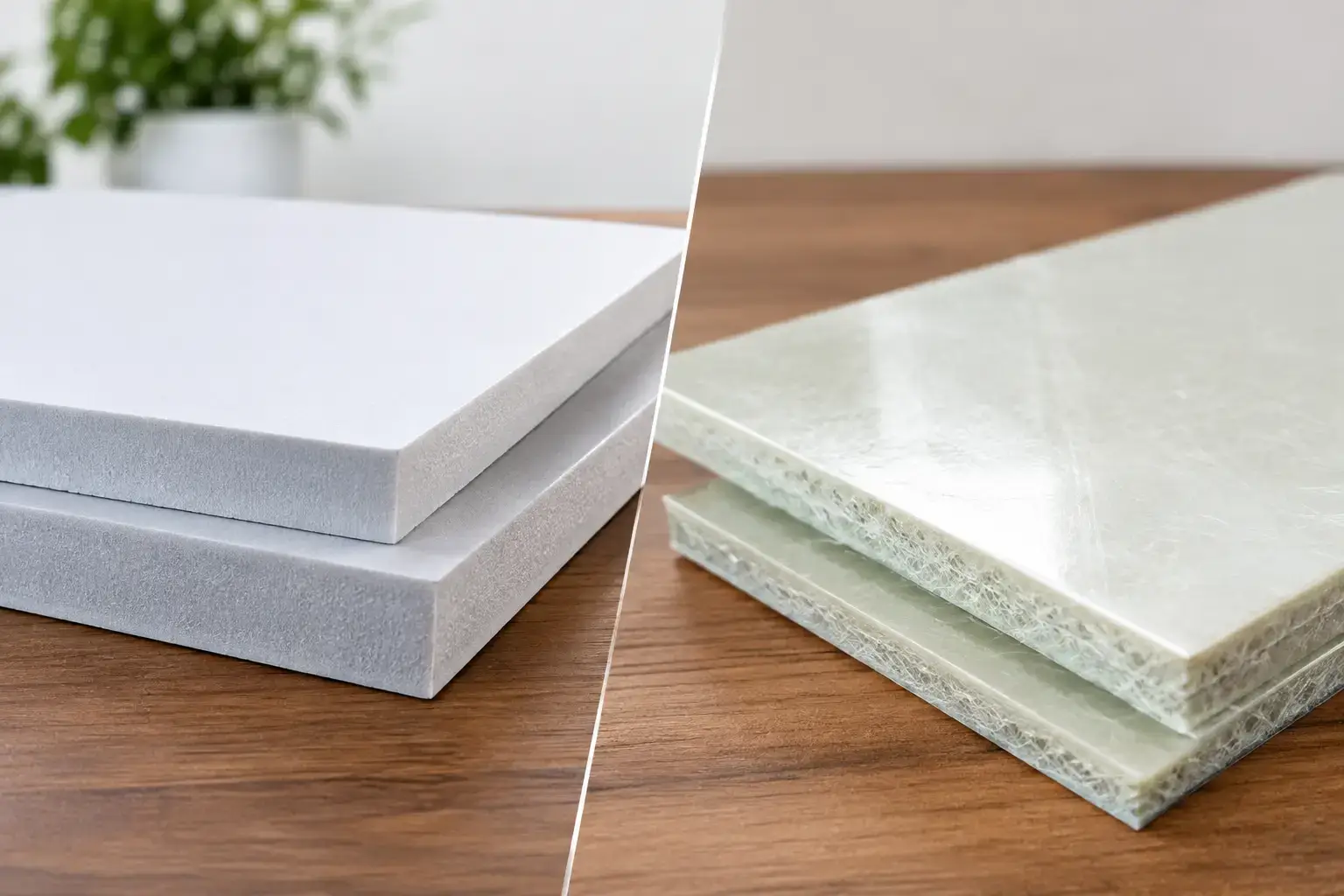
A replacement monument panel can look like a simple material decision until the existing frame, attachment points, viewing distance, and desired lettering style enter the conversation. The choice between HDU versus fiberglass sign panels should begin with the finished sign's job, not with a generic claim that one material is always better. Both can serve exterior applications well, but they behave differently in fabrication, finishing, mounting, and long-term maintenance.
For a carved entrance sign, routed logo panel, or dimensional property identification sign, 15-pound sign-grade HDU often provides more design freedom. Fiberglass can be a practical option when a project requires a molded form, a particular replacement-face construction, or a panel system already built around fiberglass. The correct choice depends on the complete assembly.
Start With How Each Material Is Built
HDU is a closed-cell polyurethane board made for carving, routing, shaping, and exterior sign fabrication. It is not wood, so it does not have grain direction, knots, or the movement associated with natural lumber. A CNC router can produce clean recessed backgrounds, raised letters, v-grooves, borders, textures, and custom profiles directly in the panel.
Sign-grade HDU is available in different densities. A 15-pound density is a common choice for exterior dimensional sign work because it offers a useful balance of machining quality and manageable panel weight. Thickness is selected around the required relief, overall panel size, mounting method, and visual depth. A shallow routed panel and a deeply carved freestanding entrance sign are not the same fabrication problem.
Fiberglass is a broader category. A fiberglass sign panel may be a flat fiberglass-reinforced plastic sheet, a molded shell, a gel-coated face, or a composite construction with a core and reinforcement. Its properties depend heavily on that construction. Before specifying fiberglass, ask for the panel thickness, reinforcement schedule, finish system, edge treatment, backing, and intended attachment method. “Fiberglass” alone does not define how stiff, flat, or repairable a panel will be.
What That Means for Fabrication
HDU is generally the more direct material for routed relief and dimensional surface work. It machines cleanly with appropriate tooling and can be shaped without exposing fibers. That makes it well suited to designs where the panel itself carries the visual detail.
Fiberglass can be cut and machined, but the process is different. Routing may expose or fray glass fibers at the edge, dust control is necessary, and detailed relief is usually more efficiently created in a mold than cut into a flat panel. If the project calls for a smooth, molded contour repeated across multiple units, fiberglass may be the more logical manufacturing route. If it calls for custom carved lettering or one-off architectural detail, HDU is usually the more practical substrate.
HDU Versus Fiberglass Sign Panels for Appearance
The face of the sign matters more than the material name. A well-built sign must read at its intended distance, hold its color under exterior exposure, and present edges and transitions that look intentional rather than improvised.
HDU can be finished to resemble painted wood, stone, sandblasted texture, or a clean contemporary panel. Routed areas create real shadow lines, which can improve legibility when sunlight changes across the day. Raised HDU letters, acrylic letters, PVC components, or metal-faced elements can also be layered onto the panel when the design needs additional contrast or depth.
Fiberglass often presents a smooth molded or gel-coated appearance. That can be useful for panels that need rounded forms, broad curved surfaces, or a clean shell-like finish. Its limitation is not appearance itself, but the degree of custom surface detail that can be economically produced after the panel is made. A smooth panel with applied lettering is a different visual system from a carved panel with integral raised copy.
For either material, color selection should be specified rather than described loosely. Provide approved artwork, color codes, finish expectations, and a clear indication of which elements are raised, recessed, or applied. Vector files are preferred, and fonts should be outlined before production. Those details prevent a material decision from becoming an artwork interpretation problem.
Exterior Durability Depends on the Whole System
Neither HDU nor fiberglass eliminates the need for correct fabrication and finishing. Exterior durability comes from the material, protective coating system, edge treatment, attachment design, and exposure conditions working together.
HDU will not rot like wood, but it still requires a complete finish system. Routed surfaces, edges, and drilled locations need proper sealing and coating. A sign face that is well painted but poorly detailed at penetrations or exposed edges may not perform as intended. HDU also has less inherent structural strength than metal framing or a heavily reinforced composite panel. Larger panels, unsupported spans, and wind-exposed installations may require an engineered support system, frame, or backing.
Fiberglass does not rot, and a properly made panel can tolerate exterior moisture well. Over time, however, its finish can weather, chalk, fade, or develop cracks if the panel flexes excessively or the coating system is not maintained. Thin fiberglass sheets can also telegraph irregularities in their support structure. A panel that appears flat on a shop floor may behave differently after it is mounted across an uneven frame.
Impact resistance is also application-specific. HDU can dent or gouge under a hard localized strike, while fiberglass can crack, chip, or delaminate depending on its construction. Neither outcome is automatically easy or difficult to repair. The access to the sign, extent of damage, paint match, and whether the panel is integral to a larger assembly all affect the repair decision.
Specify the Panel Around Its Installation
The material choice should follow a documented scope. Before fabrication begins, establish the finished width and height, thickness, routed depth if applicable, attachment locations, frame clearances, and any cutouts for posts, fasteners, electrical components, or existing monument structure.
For replacement faces, the customer or installer must verify all field measurements. That includes the actual opening size, usable mounting area, fastener pattern, panel depth, and whether the supporting cabinet or frame is square and sound. A nominal size from an old drawing is not enough when a new panel must fit an existing structure.
The following production details are especially useful to define before a custom panel is routed or built:
- Overall finished dimensions and thickness, including any required trim clearance.
- Exact location and diameter of holes, slots, cutouts, and mounting hardware.
- Whether lettering is routed into the panel, raised from the panel, or supplied as separate dimensional components.
- Paint colors, metal finishes, texture references, and the desired face orientation.
- Shipping requirements, including whether the panel must arrive as one piece or can be fabricated as coordinated sections.
Installation conditions deserve equal attention. A large sign panel may need concealed mechanical fasteners, a perimeter frame, adhesive plus mechanical retention, or a purpose-built mounting system. The manufacturer can fabricate to an approved scope, but the customer, contractor, or installer is responsible for confirming site conditions, permit requirements, structural adequacy, and final installation unless those services are specifically included.
Cost Is More Than the Price of the Sheet
Material cost is only one part of the decision. The true project cost includes artwork preparation, machining or molding, finishing, added dimensional components, mounting preparation, freight, installation labor, and expected maintenance.
HDU can be cost-effective for custom work because a design can be routed from approved vector artwork without tooling for a mold. That advantage is strongest when the sign needs unique lettering, custom borders, or a detailed carved surface. For a repeated molded component with the same shape across many locations, fiberglass may justify its setup requirements depending on quantity and design complexity.
Freight should also be considered early. HDU is comparatively light for its size, but a thick, oversized panel still requires careful packaging and may ship by freight. Fiberglass panel weight varies by construction, and molded shapes can consume more shipping volume than a flat routed panel. Packaging should protect finished edges, raised elements, and painted faces from abrasion during transit.
When Each Material Is Usually the Better Fit
Choose HDU when the sign needs carved depth, routed textures, raised copy, custom profiles, or a dimensional appearance that would be difficult to achieve with a flat composite face. It is particularly appropriate for entrance signs, property identification, church signs, architectural panels, and custom monument faces where visual craftsmanship is part of the requirement.
Choose fiberglass when the project calls for a molded form, a curved or shell-like face, compatibility with an existing fiberglass panel system, or repeated production where a mold-based process makes practical sense. Confirm the exact fiberglass construction before assuming it will perform like another fiberglass product you have used.
There are also projects where the best answer is a combination. An HDU routed panel may receive acrylic or metal-faced letters. A fiberglass structure may use separately fabricated dimensional components. Material selection does not have to be a single-substrate decision when the design and installation benefit from different materials doing different jobs.
A clear drawing, verified field dimensions, and an approved written scope will do more for a successful sign than a material label alone. Select the panel that supports the design, the mounting conditions, and the expected service life, then give the fabricator the details needed to build it accurately.