Non Illuminated Outdoor Signs That Hold Up
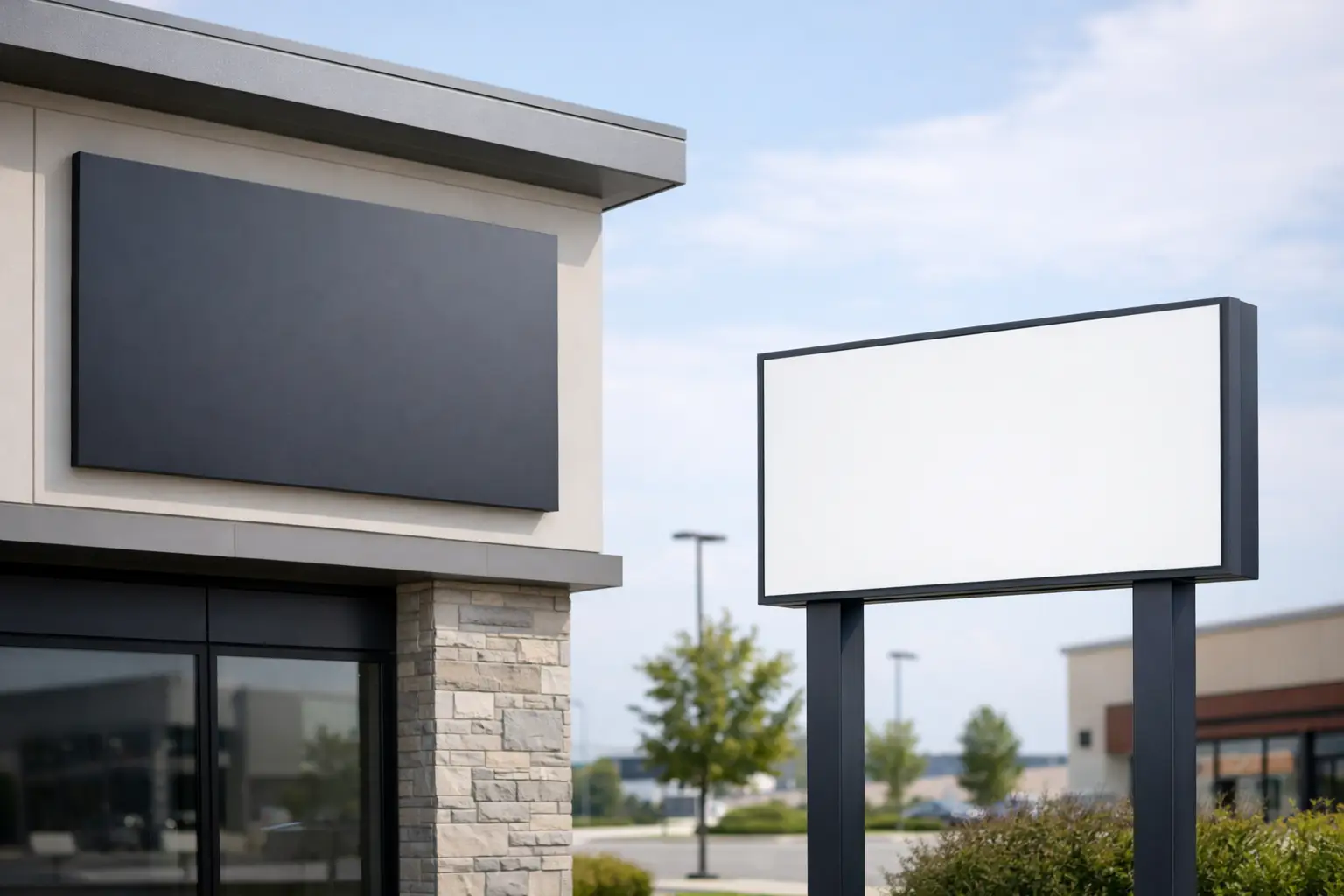
A sign does not need internal lighting to do its job well. It needs to be readable at the distance where people make decisions, built from materials that tolerate exterior exposure, and specified clearly enough that the finished components fit the intended structure. Non illuminated outdoor signs are often the right choice for property entrances, building identification, churches, offices, HOA communities, monument sign faces, and directional locations where reliable daytime visibility and lasting curb appeal matter more than nighttime illumination.
For many projects, the best result comes from treating the sign as a fabricated exterior component, not simply a printed graphic. Letter height, contrast, material thickness, mounting method, surface texture, and viewing distance all affect whether the finished sign looks established and performs as intended.
When Non Illuminated Outdoor Signs Are the Right Choice
Non-illuminated signage works especially well where the location has adequate ambient light, where local ordinances limit illuminated signs, or where the architecture calls for a more traditional and permanent appearance. A routed HDU entrance sign, dimensional building letters, or a replacement monument face can create strong identity without electrical components, wiring, transformers, or access requirements for future lighting service.
The trade-off is straightforward: a non-illuminated sign depends on available light after dark. If visitors must identify a business, driveway, or entrance at night, the overall site lighting plan should be considered early. Landscape lighting, gooseneck fixtures, nearby building lighting, or reflective material may help, but those elements are separate from the fabricated sign itself unless specifically included in the project scope.
Non-illuminated signs also suit projects where texture and dimension are part of the visual objective. Carved backgrounds, raised letters, recessed copy, layered logos, and painted borders catch natural light differently throughout the day. That depth can give an entrance sign or building identifier more presence than a flat printed panel, particularly at close and moderate viewing distances.
Start With Viewing Distance, Not Just Available Space
A large sign area does not automatically produce a readable sign. The message must be organized around what a driver or pedestrian needs to recognize first. For an office entrance, the organization name may be the primary element. For a medical campus or apartment community, the entry name and directional information may need a clearer hierarchy. For a monument replacement face, existing cabinet dimensions can set the physical limits, but the new layout still needs to work within them.
Letter height should relate to real viewing distance and approach speed. Small copy may look refined in an artwork proof but disappear from a driveway, roadway, or parking lot. A useful design asks which words must be read first, how far away the reader will be, and whether the sign is viewed from a moving vehicle or on foot.
Contrast is equally important. Dark letters on a light field, or light letters on a dark field, usually read more effectively than colors of similar value. A logo can carry a more complex palette, but the core identification should not depend on subtle color differences. Texture should support readability rather than compete with it. Deep woodgrain, stone texture, or decorative borders can add character, but the copy needs a clean enough field to remain legible.
Material Selection for Exterior Signage
Material choice should follow the sign design, exposure conditions, required profile, and attachment plan. There is no single material that fits every non-illuminated exterior sign.
Fifteen-pound sign-grade HDU is a practical choice for routed panels, carved signs, dimensional letters, raised graphics, and layered components. It is stable, moisture resistant, and routable, allowing detailed carving and custom profiles without the expansion, checking, and instability commonly associated with natural wood. HDU can be finished to resemble carved wood, painted for a clean architectural appearance, or combined with other materials for added visual contrast.
Acrylic is often selected for dimensional letters and logo elements where a crisp, smooth face is desired. PVC can be useful for painted dimensional components and certain layered applications. Metal-faced elements may be appropriate where a specific metallic finish, durability profile, or architectural look is required. The correct choice depends on the desired appearance and the fabrication details, including thickness, edge treatment, paint system, and mounting surface.
For a sign mounted to masonry, stucco, corrugated metal, EIFS, wood, or an existing monument structure, the attachment method needs attention before fabrication begins. Stud-mounted letters, flush-mounted panels, through-bolted components, and adhesive-assisted mounting each require different preparation. The customer or installer must verify field measurements, wall conditions, structural suitability, and site-specific installation requirements.
What to Specify Before Production
A custom sign quote is most accurate when the project information is complete. Vague requests such as “an outdoor sign with our logo” leave too many production decisions unresolved. Clear specifications protect both the buyer and the manufacturer because they define the finished product before materials are cut.
Provide the intended overall dimensions, whether the sign is single- or double-sided, the number of copies required, and the installation surface. For replacement monument faces, include the exact visible opening, any retaining system details, panel thickness requirements, and photographs of the existing sign structure. If the project includes dimensional letters, identify whether installation patterns, studs, hardware, or other attachment provisions are needed.
Artwork should be production-ready whenever possible. Vector files are preferred because they allow clean scaling and accurate CNC routing. Fonts should be outlined before submission so letter shapes do not change due to missing font files. If an existing logo must be recreated from a low-resolution image, that work should be discussed as a separate artwork requirement rather than assumed.
For a clear production scope, confirm these details before approval:
- Overall width, height, thickness, and any required recess or raised-copy depth
- Exact colors, preferably with Pantone, paint, or other recognized color references
- Surface style, such as smooth, carved texture, faux woodgrain, or layered construction
- Border width, trim clearance, logo placement, and any backer-panel requirements
- Attachment method, mounting-hole locations, stud layout, or installer-supplied hardware needs
A written scope should also distinguish manufactured sign components from field services. Fabrication may include routing, finishing, inspection, mounting provisions, and protective packaging. Permits, engineering, structural supports, electrical work, site surveys, and installation are separate responsibilities unless expressly included.
Design Details That Improve Finished-Sign Quality
Dimensional signs benefit from proportion. Raised letters need enough thickness and edge definition to read as intentional rather than incidental. A carved background should have sufficient recess depth to create visible separation. Borders should be wide enough to frame the panel without crowding the copy. These decisions are easier to make during artwork review than after a sign has been routed and painted.
Finish choices also deserve practical consideration. A very dark color may show dust or pollen more readily in certain environments. Highly detailed painted effects may be appropriate for a close-viewed church entrance or residential community sign, while a commercial building identifier may benefit from simpler colors and larger lettering. Coastal exposure, intense sun, freeze-thaw cycles, and irrigation overspray can all influence the preferred material and finish approach.
For multi-part signs, establish how components relate to one another. Layered logos and separate letters may ship as individual pieces, while a routed panel may arrive as a complete finished face. If components must align precisely in the field, an installation pattern or documented layout is often helpful. The installer should still verify the actual site before drilling or permanently fastening anything.
From Approved Artwork to Shipment
A disciplined fabrication process reduces avoidable surprises. Once dimensions, artwork, colors, materials, and attachment details are approved, CNC routing can produce the intended profiles and repeatable component shapes. Finishing then adds the selected colors, textures, and visual separation. Inspection should confirm that the manufactured work matches the approved scope before packaging.
Shipping deserves the same care as fabrication. Routed panels, dimensional letters, and layered logo components need protective packaging suited to their size, finish, and vulnerability at edges or raised details. Customers should inspect shipments promptly upon arrival and retain packaging until the components have been checked against the order and are ready for installation.
HDU Signs manufactures custom non-illuminated exterior sign components for shipment nationwide, with the project scope defining what is fabricated and what remains the responsibility of the customer, contractor, or installer. That clarity matters most on projects involving existing structures, replacement faces, or site-specific mounting conditions.
The strongest exterior sign is usually not the one with the most effects. It is the one that gives people the information they need, holds its visual character through real weather, and arrives with dimensions, materials, and mounting expectations clearly defined.