PVC Versus Urethane for Exterior Sign Projects
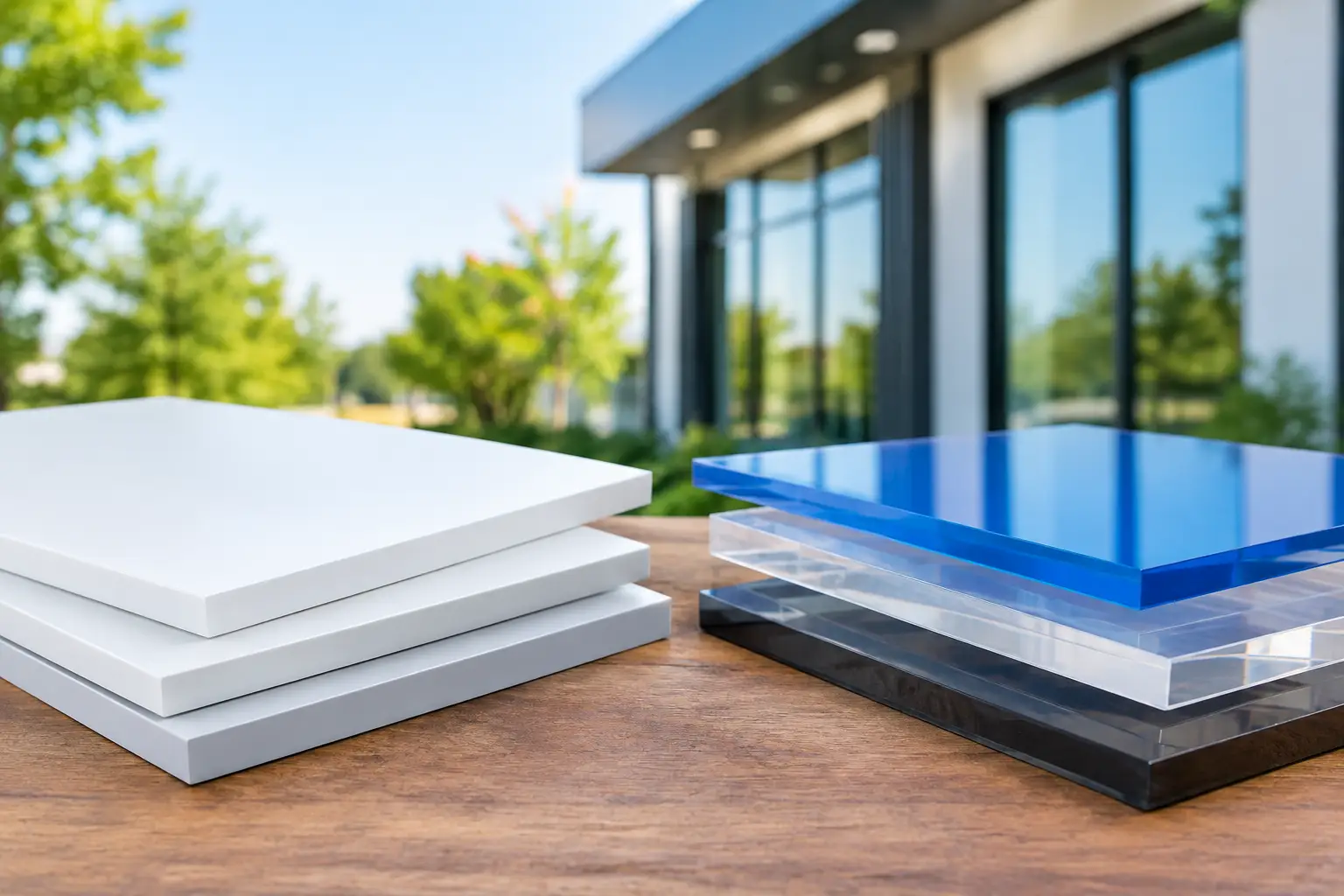
A sign panel can look straightforward on an approved proof, then become a very different production decision once thickness, recesses, mounting, paint finish, and outdoor exposure are considered. PVC versus urethane is not simply a question of which material lasts longer. It is a question of what the sign needs to do, how it needs to look at viewing distance, and how its components will be fabricated, shipped, supported, and installed.
For exterior dimensional signage, both materials have legitimate uses. PVC is often a practical choice for clean-cut letters, flat logo elements, and smooth layered details. Sign-grade high-density urethane, commonly called HDU, is often the better foundation for carved panels, textured backgrounds, raised copy, and custom profiles that need visual depth without the movement and maintenance concerns of wood.
PVC Versus Urethane: The Material Difference
PVC used in sign fabrication is typically expanded or cellular PVC sheet. It is a closed-cell plastic material with a smooth, consistent face that machines cleanly into letters, shapes, and flat panel components. Depending on the product and thickness, it can provide a crisp, contemporary appearance with relatively little surface preparation.
Urethane for sign work generally means high-density urethane foam. At HDU Signs, 15-pound sign-grade HDU is used for routed exterior sign components because it is dense enough to machine with controlled detail while remaining lightweight and stable. It is not natural wood, and it does not have grain, knots, or the moisture-driven expansion and contraction associated with wood substrates.
The materials may appear similar from a distance when both are painted, but their strengths are different. PVC begins with a smooth, flat surface. HDU begins as a routable sign substrate that can be shaped into a more dimensional sign face. That distinction affects everything from border treatment to letter relief.
When PVC Is the Better Sign Material
PVC is often appropriate when the design calls for sharp, flat elements rather than carved depth. Cut letters, simple logos, interior-exterior directional components, and layered graphics can be produced efficiently from PVC. Its smooth face works well for solid-color finishes, and its clean edges can support modern architectural sign styles.
For a set of dimensional building letters, PVC may be a sensible choice when the letters are not unusually large, the copy does not require deep carving, and the installer has an appropriate mounting method. Thickness still matters. Thin PVC letters have a different visual presence and attachment requirement than thicker letters, particularly on masonry, stucco, corrugated metal, or uneven exterior wall surfaces.
PVC can also be useful as an accent material on a urethane sign. A routed HDU panel may provide the main shape, carved background, or dimensional border, while PVC letters or logo layers create a smooth raised element. This combination can give the finished sign additional separation without forcing one material to perform every function.
Its limitations should be addressed early. PVC is subject to thermal movement, especially across larger panels and in high-heat exterior locations. Dark colors, broad unsupported spans, and direct sun can increase the importance of panel thickness, framing, mounting clearance, and substrate support. A flat PVC panel should not be specified as though it will behave exactly like a rigid metal-faced panel or a deeply routed HDU sign blank.
When Urethane Is the Better Choice
HDU is particularly well suited to signs that need depth and texture. A monument sign replacement face, church entrance panel, neighborhood identification sign, or property marker often benefits from a carved background, recessed copy, raised border, or layered logo profile. Those details create shadow lines that improve visual interest and can make the sign read as intentionally built rather than merely printed or flat-cut.
Because HDU is stable and does not absorb moisture like wood, it is a dependable option for exterior routed sign panels. A 15-pound sign-grade HDU panel can be CNC routed to create woodgrain, blasted-style textures, V-carved details, custom edges, and dimensional copy. The exact capabilities depend on the panel thickness, the size of the lettering, the required recess depth, and the design's smallest details.
HDU does require an appropriate coating system and careful finishing. Its raw routed surface is not the final sign surface. Primer, paint, texture treatment, and color selection all affect the finished appearance and service life. A quality finish also protects routed edges and helps maintain a consistent appearance across the sign face.
Urethane is not automatically the best choice for every letter set. If the design is a thin, flat, high-volume set of simple letters, PVC or acrylic may be more economical and visually appropriate. HDU is most valuable when its shaping ability contributes something visible and useful to the finished sign.
Thickness, Scale, and Readability Matter More Than Material Alone
Material selection should follow the sign's job. A small office suite identifier, a large freestanding property entrance sign, and a replacement face for an existing monument structure have different production requirements. The right material cannot compensate for copy that is too small, a logo that loses its details at distance, or a panel that is undersized for its structure.
For both PVC and HDU, thickness determines more than physical strength. It influences visible edge depth, shadow lines, routing capacity, mounting options, and how substantial the sign appears from the road or sidewalk. A one-half-inch flat element may be adequate for one application, while a larger entrance sign may require a thicker panel to support raised copy, recessed fields, and a properly proportioned border.
Letter size also affects the decision. Small letters with narrow strokes may not have enough room for deep carving or complex layered construction. Conversely, large copy on a high-visibility monument sign may need more than a thin flat letter to create adequate contrast. The approved artwork should show the actual letter heights, spacing, border clearances, and component thicknesses, not only a general design concept.
Finishing PVC and HDU for Exterior Use
Both materials need a finish specification suited to their location and visual purpose. The requested color should be identified clearly, preferably with a recognized color code or physical reference when color matching is critical. A sign's appearance can shift noticeably when a dark color is applied over a textured field, when raised letters use a different sheen than the background, or when a metallic finish is expected to look like actual metal.
PVC generally provides a smoother painted face. HDU can be finished smooth as well, but it is frequently selected because it can carry a routed texture. A sandblasted appearance, simulated woodgrain, or carved background should be discussed as a defined finish treatment, not assumed from a rough visual mockup.
Exterior exposure should also guide the design. High sun, reflected heat, heavy rain, freeze-thaw cycles, irrigation overspray, and coastal conditions can all affect the long-term finish. Material and paint choices should be based on the actual installation environment, not only the initial appearance in a rendering.
Production Details That Prevent Costly Rework
The most useful PVC versus urethane decision happens before fabrication begins. Provide vector artwork whenever possible, with fonts converted to outlines. Identify the finished overall dimensions, material thickness, colors, routed recess depths, raised components, and any requested texture. If the sign will fit an existing monument cabinet or frame, provide verified opening dimensions and clear photographs of the structure.
Mounting preparation must also be defined. Stud locations, through-hole locations, spacer requirements, mounting patterns, and whether the sign will be installed over a flat or uneven surface can affect production. A manufacturer can fabricate components to an approved written scope, but the customer or installer must verify field measurements, substrate conditions, structural suitability, and local permit requirements.
For shipped sign components, consider how the design will travel. Large thin panels, separate letters, layered logos, and projecting elements may require different packaging and installation handling. A sign that is easy to fabricate but difficult to ship or safely mount may need a different material thickness or component breakdown.
Choose the Material That Supports the Finished Sign
PVC is a capable material for smooth, flat, and layered sign elements. HDU is a specialized sign substrate for projects that benefit from carved detail, thicker profiles, textured fields, and dimensional construction. Neither choice is automatically superior without considering the sign's scale, location, finish, and installation method.
The practical next step is to specify the finished result rather than asking a material to solve an undefined design. When dimensions, artwork, viewing distance, component depth, color, and mounting conditions are clear, the material decision becomes easier to defend and the finished sign is far more likely to perform as intended.