Replacement Face Compatibility for Monument Signs
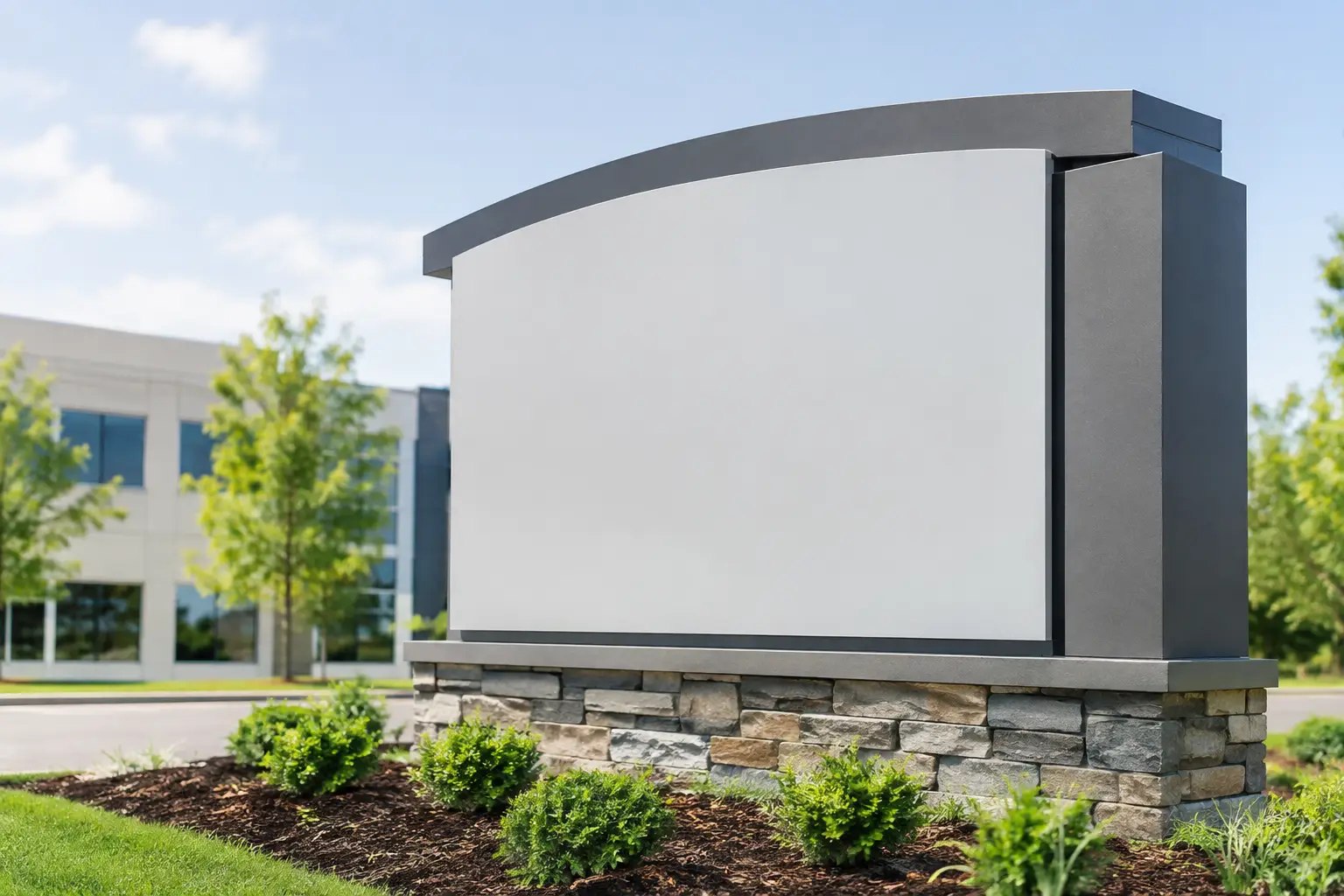
A monument sign face can look like a simple panel replacement until the new piece reaches the site and misses an existing frame, covers a mounting point, or fails to align with the surrounding structure. Replacement face compatibility is not determined by overall width and height alone. It depends on the exact opening, the existing sign construction, material thickness, attachment method, edge treatment, and the artwork that must fit within the available visible area.
For property managers, contractors, sign companies, and HOA boards, the practical goal is straightforward: order a replacement face that fits the existing monument structure, reads correctly from the road, and holds up outdoors. Achieving that result requires field-verified information before fabrication begins.
What Replacement Face Compatibility Actually Means
A compatible replacement face is one that works with the sign you already have, not one that merely resembles the old panel. The new component must fit the physical conditions of the structure and support the intended graphics, raised letters, logo pieces, or routed details.
Compatibility usually includes five connected requirements: the panel's finished dimensions, its thickness and profile, the visible area after installation, the mounting method, and the material's suitability for exterior exposure. A problem in any one of these areas can affect the finished result.
For example, a panel may measure 48 by 96 inches overall, but the existing monument may have a routed recess that accepts only a specific thickness. A thicker replacement can sit proud of the frame. A thinner one may leave an uneven reveal or require shimming. Likewise, a panel can fit the opening but still be wrong if its border, lettering, or logo is positioned where a retaining trim will cover it.
This is why an old face should be treated as a reference, not as a complete specification. Previous installations may contain field modifications, warped materials, nonstandard fasteners, or details that are no longer visible once the panel is removed.
Verify the Existing Monument Sign Before Ordering
The customer or installer must verify site measurements and existing conditions. A manufacturer can produce to approved dimensions and artwork, but cannot confirm an opening, wall condition, or hidden attachment detail from a distance.
Measure the actual opening in more than one location. Older monument structures are not always square, level, or consistent from side to side. Record the smallest usable width and height where the replacement face must fit. If the panel inserts into a recess, measure the recess depth as well as its inside dimensions.
Photographs are equally useful when they show the full sign, close-ups of edges, fasteners, trim, and the rear side of the existing face when available. Include a tape measure in selected photos. Images help identify whether the face is surface-mounted, captured in a frame, installed in a routed pocket, or attached with studs, screws, adhesive, or concealed hardware.
Measure the visible area, not just the panel
The visible area is the portion of the face that remains exposed after installation. On a framed sign, retaining channels or trim can hide part of each edge. On a layered monument sign, the surrounding cap, border, or decorative structure may reduce the usable graphic field.
Provide both the overall panel size and the exposed area. That distinction allows artwork to be positioned with proper clearance. It also prevents a common failure: lettering that is technically on the panel but partially concealed by the existing sign structure.
If the replacement includes raised lettering or logo components, confirm clearance around the perimeter and near any cap, column, or adjacent trim. Dimensional elements need room to sit flat and remain visually balanced.
Confirm thickness and face profile
Panel thickness is a functional specification. It affects how the face seats in the monument, how edges align, and whether mounting hardware reaches the supporting structure. When replacing a routed HDU panel, measure the full panel thickness and any carved or raised areas separately.
A replacement may also need a specific profile: a flat panel, a carved background, a raised border, a routed inset, or layered components. A photograph may make these treatments appear simple, but depth changes alter both the appearance and the way the face interfaces with the existing structure.
15-pound sign-grade HDU is commonly selected for custom monument faces because it is durable, routable, and stable compared with natural wood. It can be fabricated with carved textures, raised lettering, borders, and custom profiles. However, HDU is not automatically the right match for every existing sign. A project may require acrylic, PVC, metal-faced elements, or a combination of materials to match the existing visual design and mounting conditions.
Match the Mounting Method to the Existing Structure
The attachment method should be identified before the panel is fabricated. Do not assume a new face can use the same approach as the previous one without confirming the substrate and hardware layout.
Surface-mounted faces may require through-bolts, screws into a suitable backing structure, studs, or adhesive systems. Captured panels may depend on a precise edge size so they slide into an existing frame. Routed pockets require attention to depth, drainage, and clearance for painted surfaces.
If the existing face uses holes, measure their locations from consistent reference points, such as the left edge and top edge of the finished panel. Hole diameter, countersink requirements, and fastener type also matter. An old hole pattern is useful only if it has been confirmed on site and still corresponds to sound structural backing.
Avoid placing fasteners through critical copy, thin strokes, or detailed logo areas. When a design is being recreated, attachment locations should be planned alongside the artwork rather than added after layout approval.
The installer is responsible for determining whether the existing monument structure is sound, whether hardware is appropriate, and whether field conditions support the installation method. Manufacturing a correctly sized face does not repair deteriorated framing, water damage, loose masonry, or an unstable sign foundation.
Replacement Face Compatibility Depends on Artwork, Too
Artwork compatibility is often overlooked because the old sign face appears to provide all the information needed. In practice, the original logo may be unavailable, typefaces may be unknown, and old graphics may not reproduce cleanly from photographs.
Vector files are preferred for logos, lettering, borders, and routed shapes. AI, EPS, PDF, and SVG files can be useful when they contain editable vector paths. Fonts should be outlined before production approval, particularly when a custom layout depends on exact letter spacing and character shapes.
A clear photograph can support recreation, but it is not a substitute for production-ready artwork. Perspective distortion, shadows, paint wear, and low resolution can obscure details. If the objective is a close visual match, provide the best available source files, brand standards, color specifications, and photos of the existing face under normal lighting.
Color should be specified rather than described casually. Terms such as "dark green" or "bronze" can vary significantly between monitors, paint systems, and exterior lighting conditions. Provide approved color codes when consistency with an existing property identity matters. Keep in mind that a newly finished face may initially appear cleaner or more saturated than weathered adjacent materials.
Readability also deserves a fresh review. A direct copy of an older layout may not be the best decision if the sign is viewed from a roadway, driveway entrance, or parking lot at greater distance than originally intended. Letter height, contrast, spacing, and logo complexity should be evaluated against real viewing conditions, not only a close-up image.
Send a Complete Fabrication Package
A complete request reduces avoidable revisions and allows the manufacturing scope to be defined clearly. Include overall panel dimensions, visible-area dimensions, thickness, edge condition, mounting details, photographs, artwork, color requirements, and the desired finished appearance. If the existing face will remain in place until installation, document every accessible measurement before it is removed.
For complex replacements, a simple field sketch can be more useful than a long written description. Show panel edges, cutouts, mounting-hole centers, trim overlap, neighboring components, and any area that cannot be covered. Mark which dimensions are verified and which are estimated.
A written scope should state what is being fabricated: for example, a routed HDU replacement panel with raised copy, separate dimensional logo components, specified paint colors, and designated mounting preparation. It should also state what is not included, such as permits, structural repair, installation, electrical work, or on-site measurement.
Before production, review the approved artwork and dimensions as one coordinated document. A correct drawing with an incorrect size is still an incorrect replacement. The same is true when dimensions are right but the visible-area clearance has not been accounted for.
Plan for Shipping and Site Handling
Replacement faces are custom-built components and should remain protected until installation. Large routed panels, layered elements, and finished edges can be damaged if packaging is removed too early or if the face is leaned on an uneven surface.
Arrange for a receiving location that can inspect the shipment promptly. Check the crate or packaging for visible damage before moving materials to the site. Store panels flat or upright with proper support, away from standing water and unnecessary impact. Do not drill, trim, or alter the finished face without confirming that the change will not affect fit, finish, or warranty expectations.
When compatibility is documented before fabrication, replacement work becomes far more predictable. The best starting point is not a guess based on a photograph. It is a verified set of field dimensions, mounting conditions, and approved artwork that gives the new face a defined place in the existing sign.