Routed HDU Sign Panels Built for Exterior Use
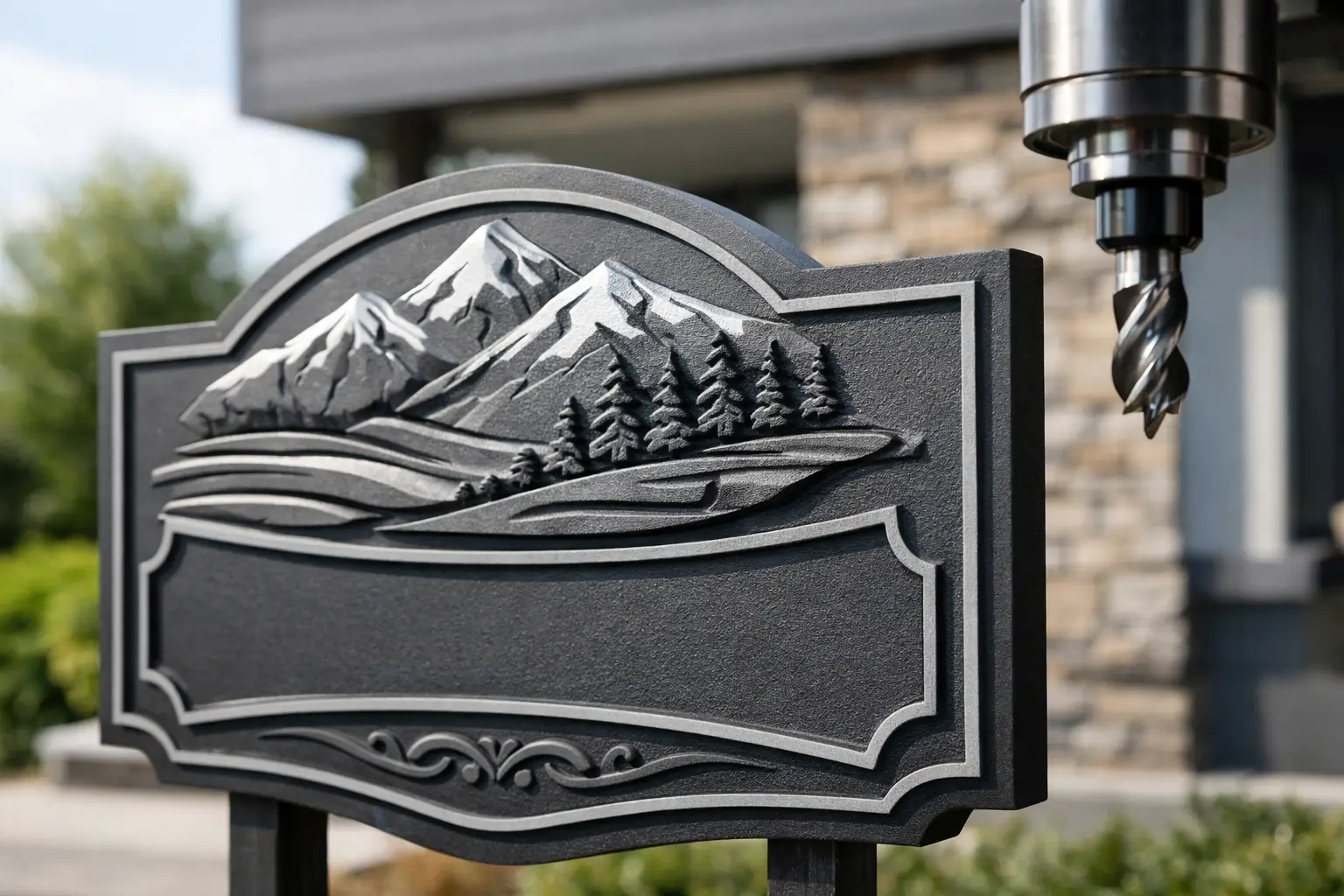
A routed panel can look highly detailed in a proof and still fail as a sign if its lettering is too shallow, its contrast is too low, or its layout is scaled for close-up viewing rather than the street. Routed HDU sign panels are built to solve that problem through controlled depth, durable sign-grade material, and graphics designed around how people will actually see the finished sign.
For property entrances, churches, office parks, retail buildings, schools, municipal facilities, and replacement monument faces, a routed HDU panel offers a finished dimensional appearance without relying on natural wood. The result can range from a clean painted panel with recessed copy to a carved, layered design with raised borders, logos, and textured backgrounds. The right approach depends on viewing distance, mounting conditions, the required finish, and what the panel needs to do on site.
What a Routed HDU Panel Is
High-density urethane, or HDU, is a closed-cell material made for dimensional sign fabrication. For exterior sign panels, 15-pound sign-grade HDU provides a practical balance of machining quality, durability, and weight. It can be CNC routed to create recessed areas, V-carved details, raised lettering, decorative borders, simulated wood grain, and custom edge profiles.
Unlike wood, HDU does not absorb moisture, split along grain, or develop the same pattern of movement as exterior conditions change. That does not mean every design should be treated the same way. Fine routed details, very thin strokes, and narrow recessed spaces still need to be evaluated for size and paintability. A durable material helps, but a readable, well-proportioned layout remains the foundation of a successful panel.
A routed panel is not the same as a flat printed sign. Its depth creates shadow lines and visual hierarchy. Those features can make a property name or logo feel established and permanent, especially when the panel is finished with a clear contrast between the background and the routed or raised elements.
Start With Viewing Distance, Not Decorative Detail
The most common specification mistake is beginning with a favorite texture, font, or logo treatment before defining where the sign will be read. A panel at a building entrance may be viewed from 20 to 50 feet. A monument sign near a roadway may need to communicate from much farther away, often to drivers moving past the property.
The primary message should receive the largest, clearest treatment. For many signs, that means the organization name, address, or directional message. Secondary copy can support the design, but it should not compete with the information people need to find quickly. A long tagline, multiple phone numbers, or a detailed seal may be appropriate for close viewing, but may add little value at roadway distance.
Contrast matters as much as letter height. Dark raised letters on a light background, or light recessed copy within a darker field, generally reads more clearly than colors with similar value. A subtle tone-on-tone treatment can be attractive in a lobby or at a pedestrian entrance. On an exterior property sign, it may become difficult to read under overcast skies, glare, or evening conditions.
Choosing Recessed, Raised, and Layered Details
Routing is not a single visual style. It is a production method that can support several different panel constructions.
A recessed-copy panel has lettering or graphics cut below the face of the HDU. This approach works well for formal entrance signs, carved backgrounds, and designs that benefit from shadow within the routed areas. Recess depth needs to be sufficient to look intentional after priming and painting. Extremely shallow cuts may lose visual definition once the finish is applied.
A raised-copy panel leaves the letters, logo, or border proud of the background while material is routed away around them. It creates a dimensional effect that often improves readability, particularly when the raised features receive a contrasting color. This method requires enough space around each element for clean routing and finishing. Tight letter spacing or delicate scripts may need to be simplified.
Layered construction adds separately fabricated HDU, acrylic, PVC, or metal-faced components to the routed base panel. It can provide more depth than a single routed face and is useful when a logo needs distinct color fields or a specific material appearance. The trade-off is added fabrication complexity and more details to define in the approved scope, including component thickness, edge treatment, attachment method, and finish.
Material Thickness and Panel Size Need to Work Together
Panel thickness is selected around the design, the overall dimensions, the routing depth, and the installation plan. A larger panel with deep relief or a substantial border may require more material than a small wall-mounted identification sign. Thickness also affects edge appearance and the available depth for carving.
The panel itself is only one part of the finished assembly. Before fabrication, the customer or installer must verify overall measurements, mounting surface conditions, structural support, and attachment locations. A routed panel can be produced accurately to approved dimensions, but it cannot correct a monument cabinet that is out of square, an uneven masonry wall, or a frame with undocumented interior obstructions.
For replacement monument faces, confirm the exact opening size and the method used to retain the existing face. Measure more than once, including width, height, corner conditions, and any trim clearance. If an existing sign has a removable frame, photographs and field dimensions help establish whether the replacement panel needs square corners, radius corners, routed edge relief, or a particular thickness to seat correctly.
Artwork Should Define What the Shop Will Build
Custom routing begins with usable production artwork. Vector files are preferred because they allow accurate scaling and clean toolpaths. Fonts should be outlined before submission so the letterforms do not change when files are opened on another system. Raster images may be useful as visual references, but low-resolution files cannot reliably define precise routed edges.
An approved layout should show more than the logo and copy. It should define finished width and height, panel thickness when known, color specifications, recessed or raised areas, routing depth where applicable, borders, textures, and separate dimensional components. If the sign includes mounting holes, studs, cleats, or other preparation, those details need to be addressed before production.
Color should be specified by a recognized standard or a clearly identified paint reference whenever possible. Descriptions such as “dark blue” or “warm gray” leave room for interpretation, especially across digital screens and printed proofs. A written scope protects both the customer and the manufacturer by documenting the features that affect fabrication and finishing.
Finishing Is Part of Exterior Performance
A routed panel is not complete when it leaves the CNC table. Proper preparation and finishing are what turn machined HDU into an exterior sign face. Routed edges, recessed areas, and textured backgrounds require careful coating so the details remain visible rather than becoming filled or softened by excessive paint buildup.
Some projects call for a smooth painted finish with crisp, modern graphics. Others use carved textures or simulated wood grain to support a traditional property entrance or community identity. Both can be effective, but the finish should match the design intent. A wood-grain texture behind very small copy can reduce clarity. A highly polished finish may not suit a rustic logo or historic setting.
Exterior conditions also influence finish decisions. Sun exposure, irrigation overspray, salt air, landscaping, and nearby traffic all affect how a sign will age. No exterior finish is maintenance-free forever. Periodic cleaning and inspection help preserve the panel’s appearance, particularly at lower edges and horizontal surfaces where dirt and moisture can collect.
Plan Shipping and Installation Before the Panel Is Finished
Because routed HDU panels are custom manufactured and shipped, packaging and handling are part of the production process. Large panels, projecting dimensional elements, and finished edges need protective packaging appropriate to the size and configuration of the order. The receiving party should inspect packaging and contents promptly after delivery, before scheduling installation.
Installation is a separate responsibility unless it is specifically included in the written scope. The customer, contractor, or sign installer is responsible for confirming field dimensions, local permit requirements, structural adequacy, access equipment, and attachment methods. This distinction matters most on monument signs and freestanding structures, where the panel may be only the visible face of a larger structural system.
An experienced installer should know the panel’s weight, thickness, mounting preparation, and finished-face orientation before arriving on site. If field conditions differ from the approved plan, resolve that issue before drilling, fastening, or altering the sign. On-site modifications can damage the finish or compromise the intended fit.
A Better Routed Panel Begins With Better Information
The strongest routed HDU sign panels are not defined by the most elaborate carving. They are defined by clear priorities: readable copy, appropriate depth, durable material selection, accurate dimensions, and a finish suited to the environment. Detailed artwork and verified field information allow the fabrication process to stay controlled from routing through inspection and packaging.
If a panel will identify a property for years, give its specifications the same attention as its appearance. A clear scope, production-ready artwork, and confirmed installation conditions make it far easier to build a sign that arrives ready for its intended place.