Urethane Signage That Holds Up and Reads Clearly
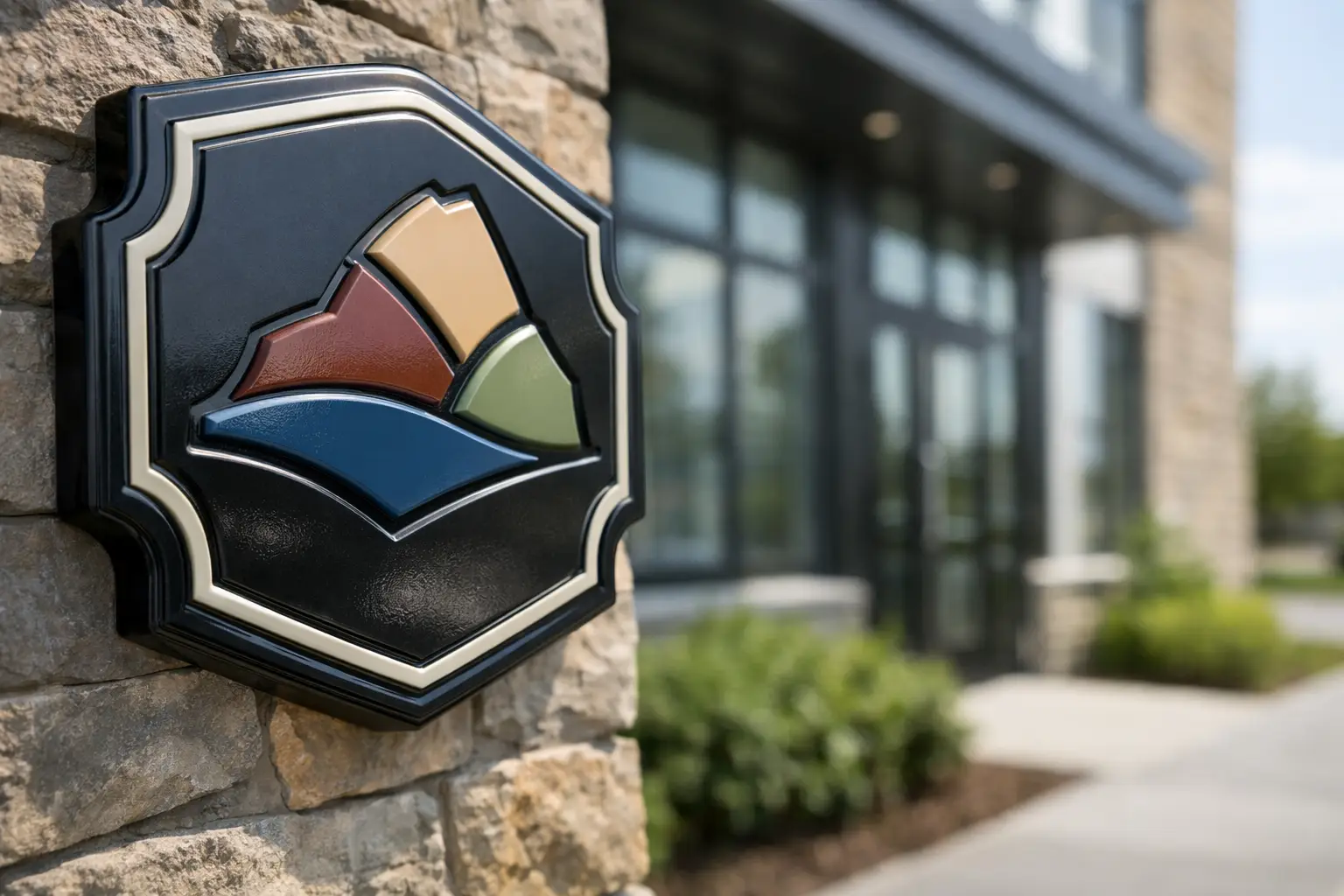
A property sign can be beautifully detailed at arm’s length and still fail at its main job: identifying a business, entrance, or destination from the distance where people actually see it. Urethane signage gives designers and property owners substantial control over depth, texture, shape, and dimensional detail, but the result depends on more than choosing a durable material. Letter size, contrast, routing depth, artwork, finish, and mounting preparation all need to work together.
For exterior dimensional signs, 15-pound sign-grade high-density urethane, commonly called HDU, is a practical material for carved panels, raised lettering, dimensional logos, borders, and custom profiles. It can provide the visual character of carved wood without wood’s tendency to absorb moisture, move with changing conditions, split, or develop grain-related inconsistencies. That does not mean every sign should be made from HDU. It means HDU is often the right starting point when a project needs durable routed detail and a fully custom shape.
What Urethane Signage Is Built to Do
Urethane signage is fabricated from high-density urethane board that is CNC routed into a specified design. Depending on the artwork and project scope, the face may include carved copy, prismatic or flat-cut letters, recessed backgrounds, raised borders, custom logos, decorative textures, or layered components. The board can be cut to a standard rectangle, an arched panel, a shield, a custom perimeter, or another defined profile.
Its main advantage is manufacturing consistency. Sign-grade HDU has no natural grain direction, so routed letter edges, borders, and carved areas can be produced predictably across the panel. That makes it well suited to entrance signs, church signs, neighborhood and HOA identification, professional office signs, routed wall panels, and monument sign replacement faces.
The material choice still has to match the visual goal. HDU is especially effective when a sign needs depth and carved character. Acrylic may be a better fit for crisp flat-cut letters, while metal-faced elements can be appropriate when the design calls for a metallic appearance or a particular architectural finish. Many projects use more than one material to create contrast between the panel, copy, and logo components.
Start With Viewing Distance, Not Decorative Detail
A sign is not read in a design file. It is read from a vehicle, across a parking lot, at a property entrance, or while approaching a building. That is why the first production question should be where the viewer will stand or travel when the sign needs to be understood.
Primary copy deserves the greatest visual priority. A property name, tenant name, building number, or directional message should not compete with an oversized logo, ornamental border, or too many secondary lines. If the sign will be viewed from the road, larger letters and strong color contrast generally matter more than intricate carved textures.
Letter height should be considered in relation to the anticipated viewing distance, speed of traffic, and available sign area. There is no single correct letter size for every application. A pedestrian-facing office sign can support smaller copy than a freestanding entrance sign viewed from a moving vehicle. Site lighting, surrounding visual clutter, and the sign’s mounting height also affect readability.
A practical design often uses two levels of information: large primary identification and smaller supporting information. Trying to make every line equally prominent usually produces a crowded sign that reads poorly. Before fabrication begins, the customer or installer should confirm the overall dimensions and the available mounting area at the site.
Specify the Routing and Relief Clearly
The visible depth in urethane signage comes from the relationship between the background, the letters, the border, and any applied elements. A routed panel may use recessed copy, raised copy, or a combination of both. The design should state which areas are to be carved, how deep the recesses should be, and whether letter faces need a flat, beveled, or custom profile.
More depth can create stronger shadows and a more dimensional appearance, especially on larger entrance or monument panels. It also affects production time, weight, edge details, and the way a finish is applied. Shallow relief can be appropriate for small copy or restrained architectural designs, while deeper carving is often more effective for large-format identification where texture and shadow are part of the intended look.
Borders require their own clearance and width decisions. A narrow routed border may look acceptable in a rendering but can become visually weak on a large panel or too delicate near a shaped outer edge. Likewise, small enclosed spaces inside letters, known as counters, need enough room to route and finish cleanly. A qualified fabricator may recommend adjusting fine details when the approved artwork does not translate reliably to the requested size.
Artwork Files Control Accuracy
Custom fabrication begins with usable artwork. Vector files are preferred because they define paths, curves, letter outlines, and shapes precisely for CNC routing. AI, EPS, PDF, and SVG files are commonly useful when they contain clean vector information. Raster images such as JPG or PNG files can help communicate an idea, but they may require redraw work before production if they are low resolution or do not contain editable paths.
All fonts should be outlined before final approval. This avoids substitutions or changes caused by unavailable font files. Logos should be supplied as vectors whenever possible, and the artwork should identify each intended color, finish area, and material component.
For a routed sign panel, an approval should establish more than the wording and general appearance. It should show the finished dimensions, panel shape, letter placement, border placement, recess depth where relevant, colors, and any separate pieces. If a customer plans to install letters or logos individually, the layout should also identify mounting centers, stud locations, or a pattern requirement.
Written scope matters because a sign project can contain assumptions that are not visible in a rendering. A clear scope defines what is being fabricated and shipped. Permits, structural engineering, wall conditions, electrical work, footings, site measurement, and installation are separate responsibilities unless they are specifically included in the quote.
Finish Is Part of Exterior Performance
HDU itself provides a stable substrate, but the finished sign still depends on proper surface preparation and a coating system suited to exterior exposure. The final appearance may use solid colors, contrasting carved backgrounds, faux wood treatments, metallic-look accents, or painted dimensional components. The best choice depends on the sign’s style, the site, and how much visual contrast is needed.
Color selection should be specific. Provide recognized color references when available rather than relying only on a screen image, since monitors and printed samples can vary. A dark letter color on a light background generally provides strong readability, but the surrounding environment matters. A sign located against dark brick, dense landscaping, or a shaded wall may need more contrast than the same sign mounted in an open, bright setting.
Maintenance expectations should also be realistic. Exterior signs collect dirt, pollen, irrigation residue, and airborne contaminants. Periodic cleaning and inspection help preserve appearance. Landscaping should be kept from rubbing against the sign face, and irrigation should not spray directly onto it. Damage from impact, improper fasteners, or site conditions is different from a manufacturing issue, which is another reason the installation approach needs to be planned early.
Plan Mounting Before Fabrication
The sign face and the mounting method are connected. A panel intended for a monument cabinet may need exact outside dimensions, a specified thickness, and edge clearance for retainers or trim. Building letters may require stud mounting, adhesive mounting, a mounting pattern, or stand-off hardware. A routed HDU panel can be mounted in several ways, but the chosen method must suit the substrate, wind exposure, panel size, and site structure.
Customers and installers must verify field measurements before approval. Existing monument openings are not always square, level, or consistent from one end to the other. A replacement face that is correct to the drawing can still be difficult to install if the site dimension was estimated instead of measured. Provide the actual opening size, trim clearance, depth limitations, and photos of the existing condition when requesting a quote.
For shipped projects, packaging is also part of the manufacturing process. Large routed panels and separate dimensional components need protection from edge damage and movement during transit. HDU Signs fabricates to the approved scope, inspects completed work, and packages custom components for shipment, while the receiving party should inspect the shipment promptly and retain packaging until the installation condition is confirmed.
A Better Urethane Signage Decision
The strongest urethane signage projects are not necessarily the most elaborate. They are the projects where the design is readable, the routed details fit the scale, the material and finish match the application, and every fabrication decision is documented before production starts. Clear artwork and verified measurements give the finished sign the best chance to look intentional on the wall, at the entrance, or in the monument where it will represent the property every day.
When preparing a project, begin with a site photo, measured dimensions, intended viewing distance, vector artwork, and a clear description of how the sign will mount. Those details turn a custom sign request into a buildable manufacturing scope rather than a set of assumptions.